Key Takeaway
- Rodents in the attic spread disease, damage wires, contaminate insulation, and increase energy bills.
- Learn how to recognize early warning signs like noises, droppings, and chewed materials.
- Understand how rodents get inside and why they rarely leave on their own.
- See the real health and safety risks of leaving infestations untreated.
- Find out why basic pest control is only a temporary fix.
- Discover Pure Eco Inc.’s proven five-step process for safe, long-term attic protection.
- Compare the costs of pest control versus full attic remediation.
- Learn how professional help and simple homeowner habits keep attics clean and rodent-free.
Why Rodents in the Attic Are a Serious Problem and How to Solve It
When you hear scratching noises in the ceiling or discover droppings in your attic, it’s a warning sign. Rodents, including rats, squirrels, and mice, spread disease, chew electrical wires, contaminate insulation, and increase energy bills. The longer they remain in your living space, the worse the damage they can cause.
This article serves as your full guide on how to eliminate mice in the attic, explaining how rodents will enter, the risks they pose, and the proven methods for removing them effectively. You’ll learn the warning signs, the step-by-step cleanup process, costs, and long-term prevention strategies.
Most importantly, you’ll see why working with professionals like Pure Eco Inc. is the best way to get a safe, thorough, and lasting solution against rodents in your attic.
How Do Rodents Get in the Attic?
Rodents are extremely resourceful. A mouse can squeeze through an opening as small as a dime, while rats can fit through a gap the size of a quarter. That means even tiny cracks in your home can become an open doorway to infestation. Professional specialists frequently find that infestations begin through:
- Cracks around chimneys, rooflines, soffits, or fascia boards
- Gaps around utility pipes, dryer vents, and HVAC ducts
- Loose garage doors, crawl space openings, or foundation gaps
- Damaged siding, shingles, or deteriorated roof materials
Rodents often take advantage of seasonal changes; they move indoors during colder months or after storms that weaken roofing and vents. They may start at ground level, slipping in through a crawl space or garage, and then work their way up into the attic. That’s why professional inspections focus on the entire home. To make sure they seal even the smallest vulnerabilities with steel mesh and weather-resistant barriers.
What attracts rodents upstairs
Your attic offers rodents the perfect hideout: darkness, warmth, and quiet safety away from predators. Loose insulation becomes ideal nesting material, while cluttered storage boxes, old clothing, and cardboard provide easy bedding. Even small food crumbs, unsecured pet feed, or bird seed in nearby storage are enough to sustain them.
Moisture also plays a role. Leaky pipes, roof leaks, or even condensation create water sources that keep rodents comfortable. Because attics are rarely visited, rodents, such as squirrels or rats, can breed undisturbed, turning a small presence into a full infestation in just weeks.
During inspections, Pure Eco Inc. often discovers a combination of these attractants. That’s why our process includes identifying and eliminating nesting materials, sealing food sources, and improving ventilation to make your attic less inviting in the future.
Why don’t they leave on their own
- Perfect living conditions: Attics provide warmth, shelter, and hidden food sources.
- Territorial behavior: Mice and rats mark spaces with feces and urine, which attract even more rodents.
- Rapid reproduction: A single pair of mice can produce dozens of offspring in just one year, turning a small problem into a large infestation.
- Persistent contamination: Even if some rodents are trapped or poisoned, their nests, droppings, and scent trails remain, drawing new rodents back in.
- High reinfestation risk: Without professional removal, sanitation, and proofing, infestations almost always return.
How to Get Rid of Mice in the Attic (Effective & Long-Lasting Service Solutions)
Most homeowners notice rodent problems only after they’ve become serious. Rodents are nocturnal, so the first clue is often scratching, squeaking, or scurrying noises at night. The trained eye of professional technicians, however, can quickly identify even subtle warning signs, such as:
- Droppings and odors
- Chewed materials
- Grease trails and rub marks
- Torn or shredded insulation
Because rodents multiply quickly, even a few of these signs indicate that the problem may already be widespread. While DIY inspection is a good first step, handling contaminated droppings or insulation is unsafe without proper protection.
“We often get calls when homeowners hear noises at night, but by then rodents have usually been in the attic for weeks,” says Beni, Senior Technician at Pure Eco Inc.
Basic pest control methods, like snap traps, glue boards, or poison baits, may reduce rodent numbers, but they rarely solve the problem.
- Traps only catch one rodent at a time, leaving the rest of the colony active.
- Rats and other rodents often die inside walls or ducts, leading to foul odors, bacterial growth, and even secondary pests.
- Basic pest control doesn’t remove contaminated insulation, droppings, or nesting materials that continue to attract new rodents.
- Without sealing cracks, vents, and entry points, new rodents can easily move back in.
The result is infestations that return again and again, costing more time, money, and stress in the long run.
That’s why homeowners turn to Pure Eco Inc.. Instead of treating symptoms, our team delivers a comprehensive solution. We remove contaminated insulation, disinfect the attic, seal every entry point, install new insulation, and restore energy efficiency. It’s the difference between a temporary fix and a permanent resolution.
The Proven 5 Steps to Remove Rodents and Restore Your Attic
Our team follows a thorough process that promises real results:
- Insulation Removal – Safely removing contaminated insulation to expose nests and entry points.
- Sanitation & Disinfection – Neutralizing bacteria, odors, and pheromone trails that attract more rodents.
- Rodent Proofing – Professionally sealing cracks, vents, chimneys, and pipes with steel mesh and durable sealants.
- Air Sealing – Improving energy efficiency while eliminating rodent access points.
- Installing New Insulation – Restoring a clean, energy-efficient attic with fresh insulation.
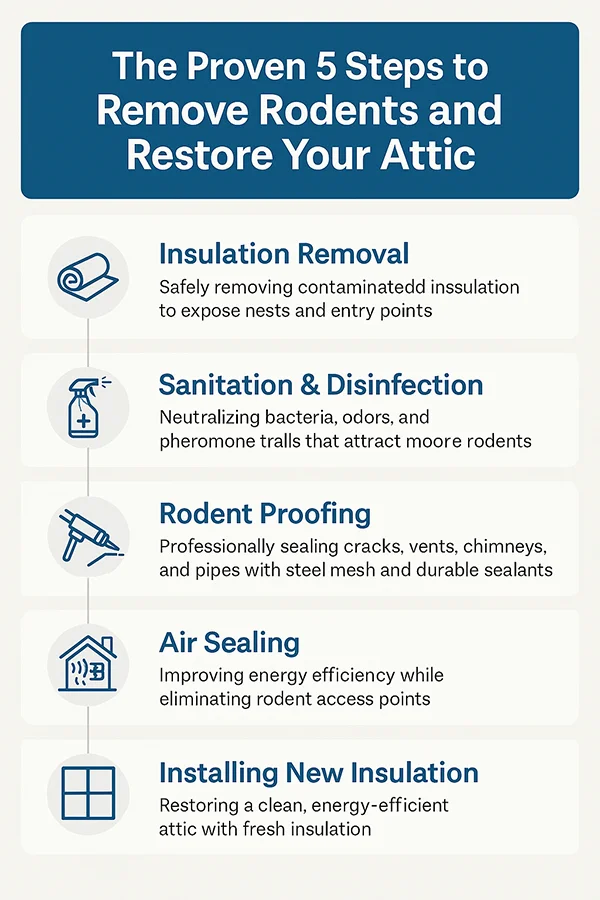
Alt- 5 Steps to Remove Rodents from Your Attic – Pure Eco Inc
Some homeowners try DIY methods such as using humane traps, natural repellents like peppermint oil, or keeping the attic tidy with sealed food storage. These steps can help for a short time, but they do not solve the problem fully.
For lasting results, the attic must be protected after the rodents are removed. At Pure Eco Inc., we seal every entry point, upgrade insulation and air sealing, disinfect and deodorize the space, and provide follow-up monitoring if needed. When these professional services are combined with simple homeowner habits, the attic stays clean, safe, and rodent-free for the long term.i
“DIY methods can slow rodents down, but only full remediation keeps your attic protected for years,” says Beni, Senior Technician at Pure Eco Inc.
How to Remove Rodents from the Attic – Step-by-Step
Prepare the Area Safely
Rodent droppings and urine can spread diseases such as hantavirus and salmonella. According to CDC guidelines, they must be handled with extreme caution. At Pure Eco Inc., our technicians use protective suits, respirators, and medical-grade disinfectants to ensure safe cleanup. For homeowners, it’s critical to ventilate the attic first, wear gloves and masks, and avoid sweeping or vacuuming droppings, as doing so can release harmful particles into the air.
Capture vs. Exclusion
While traps or humane cages may remove a few rodents, they don’t stop new ones from coming back. The only permanent solution is exclusion: sealing every hole, gap, or crack that rodents use to enter. Pure Eco Inc. combines safely and humanely trapping with professional-grade rodent proofing tactics, using steel mesh and weather-resistant sealants to create a long-term barrier. Once access points are sealed, your attic becomes a rodent-free zone.
Follow-Up Cleaning
Wildlife removal isn’t complete until the contamination they leave behind is addressed. Droppings, urine stains, and nest materials continue to spread disease and attract more rodents. That’s why Pure Eco Inc. conducts full sanitation, disinfecting all surfaces, deodorizing the attic, and replacing contaminated insulation. This step can restore safe indoor air quality, eliminate pheromone trails, and protect your home.
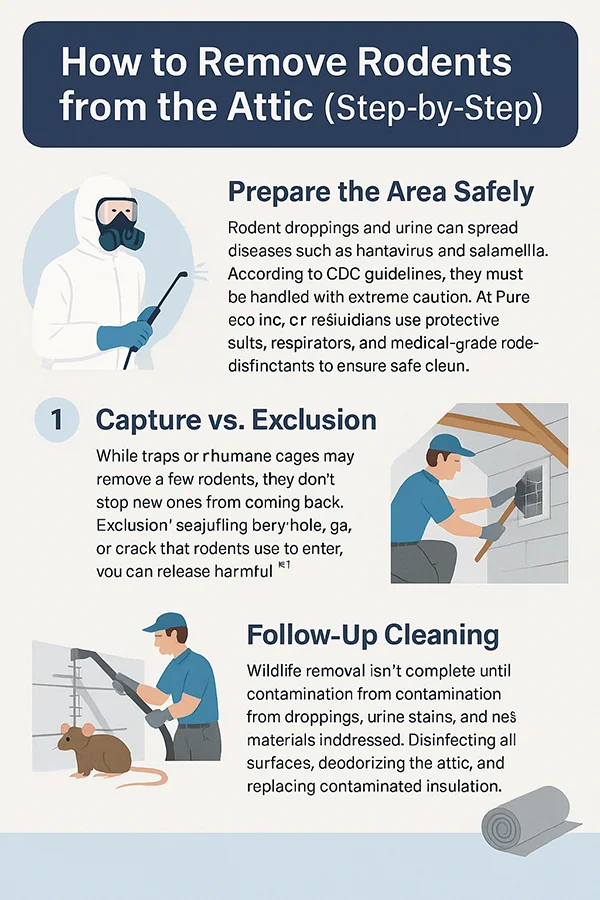
Alt – How to Remove Rodents from the Attic – Pure Eco Inc
“Many people think the problem is solved once the rodents are gone, but the contamination they leave is just as harmful. Cleaning, disinfecting, and replacing insulation is what protects the family’s health and the home’s comfort.” – Beni, Senior Technician at Pure Eco Inc.
Health Risks & Why They Matter
Rodent infestations are far more dangerous than most homeowners realize.
- Serious diseases. Rodent droppings and urine can carry salmonella, hantavirus, leptospirosis, rat-bite fever, and even, in rare cases, plague.
- Airborne contamination. Droppings dry out, break down, and release harmful particles into the air, creating respiratory and gastrointestinal risks for your family.
- DIY dangers. Sweeping or vacuuming droppings can worsen exposure, which is why professional sanitation is critical after an infestation.
- Electrical hazards. Rodents can chew wires to control tooth growth, increasing the chance of short circuits and house fires.
- Insulation damage. Shredded and contaminated insulation reduces indoor air quality and drives up energy bills.
- Hidden costs. What begins as a small rat infestation can lead to higher utilities, expensive repairs, and ongoing safety hazards faster than you think.
Pure Eco’s solution. Our proven five-step process removes rodents, eliminates contamination, restores insulation, and ensures your attic is safe, clean, and energy efficient.
How Much Does It Cost to Get Rid of Mice in the Attic?
Many homeowners first try pest control because it looks cheaper. A standard visit usually costs between $100 and $350. This service may include traps or poison, but it often needs to be repeated. The reason is simple: it removes some rodents, but it does not fix the real problem. The attic is still dirty, insulation stays contaminated, and small holes remain open. This means new rodents can come back very easily.
A full attic remediation gives a long-term solution. The price is usually $2.70 to $4.30 per square foot. This process is more complete because it includes removing all contaminated insulation, disinfecting the area to kill bacteria and smells, sealing every entry point, and adding new insulation. It also improves your home’s energy efficiency and keeps your indoor air cleaner.
While the first option looks cheaper, many families end up paying more over time because the rodents keep returning. With a full remediation, you pay once and get both safety and comfort. You also avoid the health risks, bad smells, and possible fire hazards from damaged wires.
“When you pay for remediation, you’re not only removing rodents. You are also paying to protect your family’s health, indoor air quality, and even your home’s fire safety.” – Beni, Senior Technician at Pure Eco Inc.
Keep Your Family Safe
Rodents in your attic can cause serious damage to your home and pose a health risk to your family. By identifying the signs of a rodent infestation and taking steps to prevent their entry, you can protect your home and keep your family safe. If you do have a rodent problem in your attic, contact a professional pest control company to get rid of the rodents and prevent future infestations. With the right approach, you can make sure that your attic remains a safe and comfortable space for your family.
Call Pure Eco Inc. today at (877) 870-7998 to find out how to get rid of rodents and request your free Home Comfort Estimate!
Frequently Asked Questions
How long does this process take?
For most attics, professional rodent removal and remediation can be completed in a single day. Larger or more heavily infested spaces may require up to two days to make sure all steps, removal, sanitation, proofing, and insulation replacement, are completed thoroughly.
Do air ducts need replacing?
If rodents have damaged or contaminated your air ducts, replacement is strongly recommended. Contaminated ducts can circulate harmful particles and odors throughout your home, lowering air quality and putting your family’s health at risk. Replacing them cleans the airflow and prevents future problems.
Can pest control still be useful?
Yes, but only as part of an ongoing monitoring plan. Traditional pest control methods like traps or baits can help catch stragglers or detect early activity, but they do not address contamination, entry points, or nesting materials. For long-term results, pest control should be paired with comprehensive attic remediation and rodent proofing, the kind of approach that Pure Eco Inc. specializes in.
How do I know if I have rats and mice in my attic?
You may hear scratching or scurrying at night, notice droppings, see chewed wires or insulation, or smell strong urine odors. A rat is usually larger and leaves bigger droppings, while a mouse leaves smaller, rice-shaped droppings.
What is the fastest way to get rid of rats or mice in the attic?
The fastest method is to set up multiple traps in areas with high rodent activity while sealing entry points at the same time. Combining trapping with proper sanitation and sealing ensures quicker results than trapping alone.
Do I need to replace attic insulation after a rodent infestation?
Yes, in most cases, contaminated insulation should be removed. Rodent urine, droppings, and nesting materials can spread disease and reduce energy efficiency. New insulation helps restore clean air and lower energy bills.
Can rodents damage my home if left untreated?
Absolutely. Rodents chew wires (fire hazard), destroy insulation, contaminate air ducts, and spread diseases such as hantavirus and salmonella. The longer they stay, the more structural damage they cause.
Are natural repellents like peppermint oil enough to keep rodents out?
Peppermint oil and ammonia may temporarily deter rodents, but they rarely solve the problem. For long-term results, sealing holes, trapping, and professional attic cleaning are far more effective.
How do professionals remove rodents from the attic?
Experts usually follow a multi-step process: inspecting and sealing entry points, removing contaminated insulation, disinfecting, installing traps or exclusion devices, and finally reinstalling insulation to restore comfort and efficiency.