
Attic Removal Guide – How to Safely Remove Old Insulation Step-by-Step
In this guide, we explain how to clean insulation properly, when to replace it, and why professional help is often synonymous with better and more long-term results.
Cleaning attic insulation doesn’t simply remove dust. It also influences the levels of your home’s energy efficiency, indoor air quality, and overall comfort. At Pure Eco Inc., we’ve seen firsthand how neglected insulation can lead to higher utility costs, respiratory issues, and even structural damage.
A house is more than a shelter; it’s the energy we save, the air we breathe, and the comfort we feel every day.
Joseph Lstiburek, Building Science Expert
Why Remove Attic Insulation?
Insulation’s purpose is to trap air and resist heat transfer, commonly measured as R-value. When contamination—dust, rodent waste, or mold—accumulates, the R-value can drop by up to 50%, which means that your attic loses its thermal barrier. Pure Eco Inc. professional technicians often find that what starts as a minor rodent issue quickly escalates into widespread contamination that compromises health, efficiency, and structural integrity.
Energy cannot be created or destroyed, it can only be changed from one form to another.
Albert Einstein
Signs your attic insulation needs cleaning or removal
- Uneven room temperatures: Dirty or compacted insulation loses its ability to retain heat, and that causes inconsistent comfort levels throughout the home.
- Rising energy bills: When insulation loses its R-value due to factors such as dust, moisture, or pest damage, your HVAC unit must work harder to stabilize indoor temperatures. This results in significantly higher heating and cooling costs, often by 20% or more.
- Musty or foul odors: A lingering smell from the attic usually signals mold growth, rodent urine, or decaying organic material within the insulation.
- Visible damage or stains: Dark spots, compressed areas, or sagging insulation layers are warning signs of moisture intrusion or pest activity.
- Pest droppings or nesting materials: These contaminants are unsanitary and also dangerous to your home’s electrical safety.
- Increased allergies or respiratory issues: If household members experience unexplained allergies, coughing, or irritation, airborne particles from contaminated insulation may be circulating indoors.
At Pure Eco Inc., we take these warning signs seriously and treat them effectively. During our inspections, we use thermal cameras to detect uneven insulation coverage, moisture meters to identify hidden leaks, and contamination testing to determine whether cleaning or full replacement is the safest and most effective solution.
Rodents, mold, moisture, and dust are some of the most common issues found in attics. Our inspections often uncover these problems, helping us determine the best way to restore your attic’s safety and energy efficiency:
- Rodents tend to chew through insulation, wiring, and vapor barriers, leaving behind urine-soaked fibers that never regain their insulating properties.
- Mold thrives in damp materials, spreading spores through your HVAC system.
- Dust and debris compress the insulation, reducing its ability to maintain R-values.
From a health perspective, insulation fibers that are coated with dust, rodent droppings, and mold spores can circulate irritants throughout the house. Mold spores are particularly hazardous as they thrive in damp insulation and, once airborne, they can trigger asthma, chronic coughing, and severe allergic reactions.
Rodent infestations add another layer of risk, as their urine and droppings often carry bacteria and viruses, which can become airborne when disturbed. Even when you don’t see visible contamination, microscopic particles may already be compromising your indoor air quality.
Energy efficiency suffers dramatically when insulation is dirty or damaged. Moisture-laden or compressed insulation loses its thermal resistance (R-value), allowing heat to escape in winter and infiltrate in summer. This means your HVAC system has to run longer cycles to maintain the same temperature, increasing energy consumption by 20–30% or even more in severe cases. Over time, this added strain also shortens the lifespan of your heating and cooling equipment.
Can You Clean Insulation or Should You Replace It?
The decision depends on the type of insulation and the severity of the damage. At Pure Eco Inc., we always start conducting a thorough evaluation using moisture meters, thermal imaging, and contamination testing to determine whether cleaning is viable.
Types of insulation & how they react to contamination
- Fiberglass Batts: Can sometimes be vacuumed if contamination is superficial, but when urine and mold penetration are detected, replacement is necessary.
- Blown-in Cellulose: Because it’s highly absorbent, all wet or moldy sections must be removed entirely.
- Spray Foam: Resists pests and moisture better but cannot be cleaned once contaminated; localized cutting and re-spraying is necessary.
Deciding whether to clean or replace insulation depends on the extent of the damage. Cleaning is feasible when contamination is minor and the material’s structure remains intact. However, if R-values have dropped, moisture has infiltrated, or pests have spread extensively, at Pure Eco Inc., we recommend removing the existing insulation and installing new, high-efficiency insulation.
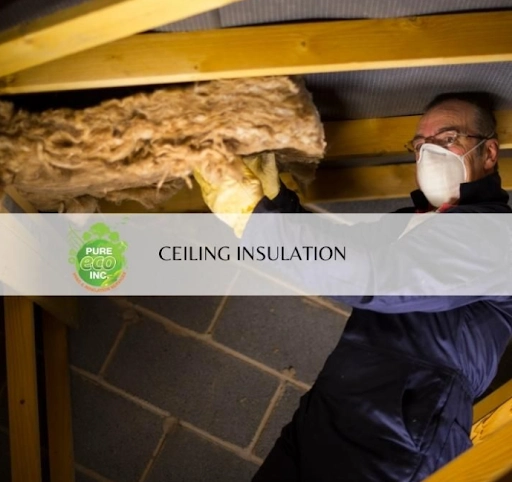
Safety Precautions Before Removing Attic Insulation
Removing an attic can pose several hazards when not properly prepared. At Pure Eco Inc., we always prioritize safety, and that’s why we follow strict OSHA guidelines to prevent exposure to harmful particles and electrical hazards.
Protective gear (respirators, gloves, coveralls). Always wear an N95 or P100 respirator, gloves, and disposable coveralls. These prevent inhalation of insulation fibers, rodent allergens, and dust.
Electrical hazards & precautions. Before any work begins, our technicians de-energize attic circuits and inspect for exposed wires. Homeowners who attempt DIY projects should also be aware of nails, junction boxes, and wiring hazards.
Checking for asbestos or other hazards. Homes built before 1980 may contain asbestos insulation. If suspected, never attempt to clean asbestos yourself. Pure Eco Inc. can handle it for you by arranging professional testing and certified removal
Tools and Materials You’ll Need
For DIY cleaning, you can use a HEPA shop-vacuum, heavy-duty trash bags, plastic sheeting, and sealing tape. Professional technicians typically use industrial-level HEPA vacuums, negative air machines, and enzyme-based sanitizers to make sure they remove contaminants entirely. Proper lighting and ventilation equipment are also key to safety.
Step-by-Step Guide Before Removing Attic Insulation
Step 1 – Inspect the attic and identify problem areas. What you need to look for are stains, mold, and pest activity.
Step 2 – Seal entry points (rodents or pests). Seal all gaps, cracks, and vent openings with metal mesh and pest-resistant foam. If your space is not sealed, rodents will return.
Step 3 – Remove contaminants (droppings, nesting, mold). You can manually collect droppings and nesting material, and then disinfect using enzyme cleaners. At Pure Eco Inc., we apply professional virucide products that neutralize pathogens at the molecular level.
Step 4 – Vacuum and spot clean insulation. With a HEPA vacuum, remove dust and debris. You’d better avoid disturbing fiberglass batts, as compression reduces R-value.
Step 5 – Remove damaged or contaminated sections. We use high-powered HEPA vacuums with negative air pressure systems to safely extract loose-fill insulation without spreading contaminants. For fiberglass batts or spray foam, our technicians cut, bag, and seal sections in heavy-duty, leak-proof containers, so that contaminants remain contained throughout removal and disposal.
Step 6 – Sanitize the area. Once we remove the insulation, we fog the attic with medical disinfectant, so all bacteria, mold spores, and odors are eliminated. This step also works as a preventive measure against rodents being re-attracted by residual pheromones.
Step 7 – Check ventilation & air flow. Finally, confirm that soffit vents, ridge vents, and fans are unobstructed. Proper airflow prevents future moisture buildup and preserves insulation performance.
Special Cases: Mold, Rodents, and Water Damage
To clean moldy insulation, we remove all affected material using sealed containment methods. Mold can penetrate fibers deeply. Pure Eco Inc. removes affected insulation with sealed containment methods and treats all wood framing with EPA-approved fungicides, followed by drying and ventilation to prevent recurrence.
When dealing with rodent infestation, we safely remove contaminated insulation and disinfect the area. Rodent urine contains ammonia, and droppings carry bacteria like hantavirus. We remove contaminated insulation with sealed-bagging techniques and sanitize with enzyme and virucide treatments to eliminate health hazards and odors.
After roof leaks or moisture damage, we replace water-damaged insulation and dry the attic thoroughly. Water-soaked insulation loses its R-value permanently. Pure Eco Inc. uses moisture sensors to identify hidden dampness, removes compromised sections, dries the attic with industrial fans, and installs new, moisture-resistant insulation.
How to Prevent Future Attic Insulation Problems
Regular attic inspections help catch problems early and prevent costly repairs. We recommend having your attic inspected twice a year. Our Pure Eco Inc. technicians offer scheduled maintenance services to detect insulation issues early, before they become costly.
Pest-proofing steps can protect your attic from rodents and other intruders. Preferably, install metal screens, seal cracks, and use pest-resistant insulation materials that can keep rodents out of your living space.
Proper air sealing and ventilation improve energy efficiency and protect insulation. When air sealing is done right, it can keep your heated or cooled air from escaping, while well-balanced ventilation prevents moisture buildup. Together, these measures protect your attic environment and significantly extend the lifespan of your insulation.
Should You DIY or Hire a Professional?
DIY cleaning can work for small problems, but most attic issues need expert help. While DIY cleaning is possible for minor dust or isolated issues, most attic contaminations require professional expertise.
It’s safe to clean your attic yourself only under certain conditions. A safe attic for DIY work should have solid, walkable joists, adequate ventilation to prevent overheating, and no signs of rodent infestation or extensive water damage. Don’t forget to use proper safety gear.
You should call a professional attic cleaning company when the problem is severe. Call Pure Eco Inc. when contamination is extensive, you uncover hidden mold, or rodents have nested. We are insulation experts who use specialized removal equipment, containment processes, and sanitization protocols to ensure we clean your attic as expected–thoroughly and safely.
Professional attic cleaning costs vary, but it’s a smart investment. Professional cleaning costs can range between $1,500 to $3,000, depending on the size of your attic and level of contamination. This is an investment that pays off through improved energy efficiency and air quality.
When to Consider Full Replacement or Re-Insulation
If your insulation is over 15 years old, heavily contaminated, or you feel it’s underperforming, Pure Eco Inc. highly recommends a full replacement with modern materials, with energy-efficient properties.
Attic insulation is one of the smartest ways to prevent energy loss, health issues, and costly repairs—all with a single solution.
Eli, Senior Technician at Pure Eco Inc.
Contact us now at 1-877-870-7998 because your comfort is our top priority, and you deserve the best.
Faq
Is it safe to remove attic insulation by myself?
It’s possible for small areas, but safety is key. Always wear gloves, a mask, and eye protection to avoid contact with dust, mold, or fiberglass particles. If you see signs of rodent infestation, mold, or water damage, it’s best to hire professionals who use sealed containment and proper sanitization tools.
How do I dispose of old attic insulation properly?
Place removed insulation in heavy-duty, sealed bags to prevent dust from spreading. Check local waste disposal rules – some areas require special handling for insulation materials, especially if they’re contaminated.
Can I clean and reuse insulation, or should I replace it?
You can clean insulation only if the contamination is minor and the material is intact. However, if it’s wet, moldy, or damaged by pests, it should be replaced. Old insulation often loses its R-value and becomes less effective over time.
How do I know if my attic insulation contains asbestos?
If your home was built before 1980, there is a risk that insulation could contain asbestos. Do not disturb it yourself. Contact a licensed professional to test the material safely before any removal work.
What’s the best way to remove blown-in insulation like cellulose or fiberglass?
Use a HEPA-filter vacuum designed for insulation removal, and make sure the attic is well-ventilated. For larger jobs, professionals use high-powered vacuums with negative air pressure to safely collect and dispose of the material.
How do I know if my attic insulation is dirty?
Dirty insulation has stains, smells bad, and may trigger allergies or cause dust indoors. Our professional inspections confirm contamination levels.
Is it safe to vacuum attic insulation?
Yes, it is, but only with a HEPA-filtered vacuum. Pure Eco Inc. uses industrial HEPA systems and negative air pressure to prevent cross-contamination.
Can dirty insulation cause health problems?
Of course. Contaminants can cause asthma, allergies, and other severe respiratory issues. With professional sanitization, you can prevent these risks from happening.
How often should I clean or replace attic insulation?
Inspect every few years, clean when contamination is minor, and replace when performance is compromised. Our experienced technicians can guide you through this at the right time.
Sources
- EPA – Mold Cleanup in Your Home
https://www.epa.gov/mold/mold-cleanup-your-home - U.S. Department of Energy – Insulation Basics and Energy Efficiency
https://www.energy.gov/energysaver/insulation - Occupational Safety and Health Administration (OSHA) – Insulation Removal Safety https://www.osha.gov