
Best Attic Insulation Materials – Expert Guide
At Pure Eco Inc., we created this guide to help you make the smartest choice for your attic. We’ll walk through the main insulation types, compare their performance and costs, and highlight the key things to consider that really matter when upgrading your home. By the end, you’ll know exactly which insulation fits your climate, budget, and long-term comfort goals.
In this article, you’ll find practical answers to the most common questions homeowners ask about attic insulation:
- Learn what insulation for the attic gives the best balance of comfort, energy savings, and cost.
- Understand what type of insulation for attic works in warm vs. cold climates, including building code R-value recommendations.
- Compare pros and cons of materials to find the best insulation for the attic — fiberglass, cellulose, spray foam, rigid foam, and mineral wool.
- Discover the best blown insulation for the attic and when fiberglass or cellulose is the smarter choice.
- Get expert tips on moisture control, ventilation, rodent-proofing, and whether to choose DIY or professional installation.
What Insulation Is Suitable for Your Attic?
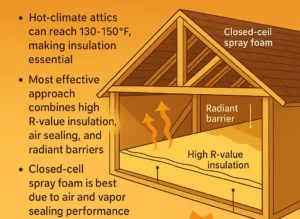
In summer, attic temperatures can soar above 130°F, radiating heat down into bedrooms and living spaces. In winter, that same attic can turn into an icebox, siphoning heat out of your home. Without the right insulation, your HVAC system works harder, your utility bills rise, and your comfort suffers.
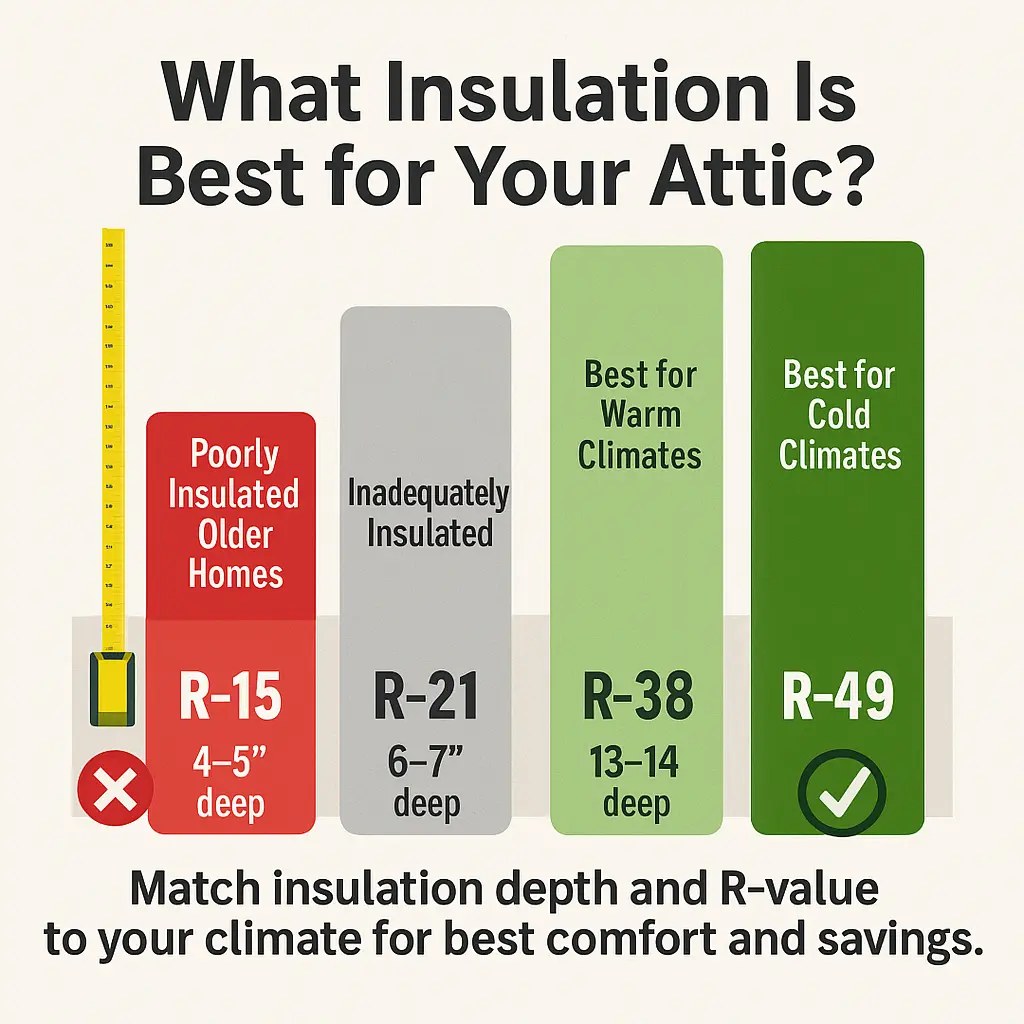
Building codes across the U.S. reflect this challenge. In warmer states like Texas, where attics bake under long, hot summers, codes typically recommend R-38 to R-60 for attic insulation. In colder climates like Minnesota, the requirement often reaches R-49 or higher to resist heat loss during freezing winters. These R-values are based on years of building science that balance energy efficiency with regional climate realities.
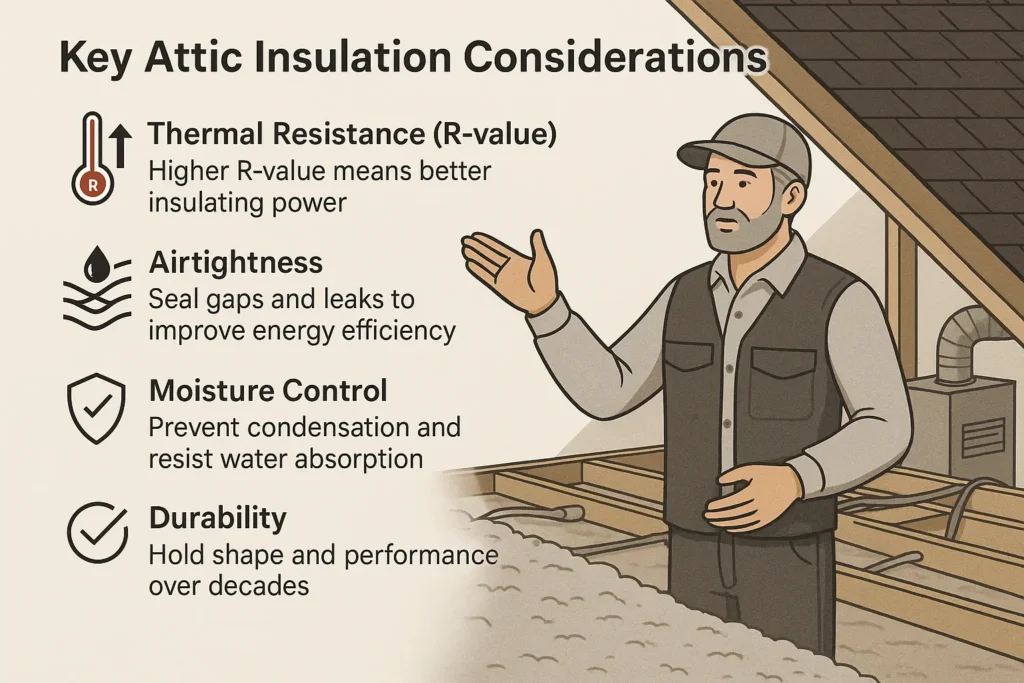
That translates as your attic insulation must do more than simply “cover the floor.” It needs to perform on multiple fronts:
- Thermal resistance (R-value): This is the measure of how well insulation resists heat flow. A higher R-value means more effective insulation.
- Airtightness: Gaps and leaks around ducts, wiring, floor joists, and framing can undo even the highest R-value. Insulation should help seal air movement, especially in attics, where small cracks can add up to big energy losses.
- Moisture control: Attics are prone to condensation from rising household humidity. Insulation materials must resist absorbing water and allow for proper ventilation. Otherwise, mold, mildew, and wood rot can take hold.
- Durability: Some materials, like blown-in fiberglass, can reduce performance as they settle over time. Others, like cellulose, can clump in humid conditions. The best attic insulation should hold its shape and effectiveness for decades.
When you combine these factors, the “best” attic insulation isn’t the same for every home. It depends on your climate, your budget, and how long you plan to stay in the house. When choosing the right type, you’re also choosing to achieve the right balance between upfront cost and long-term comfort and savings.
Type of Insulation for Attic – Comparing Insulation Types
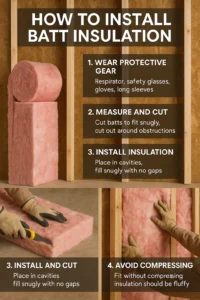
Fiberglass insulation. Imagine heading to your local home improvement store, grabbing a few batts, and rolling them out across your attic floor in a single afternoon. This is fiberglass batt insulation that’s simple, affordable, and friendly for DIY projects. Just remember, it can irritate your skin and lungs without protective gear.
One advantage often overlooked is serviceability. Batts can be moved aside if you ever need to run new wiring, install ducts, or service your HVAC system, something that’s much harder with blown-in or spray foam insulation. They are also less likely to attract rodents compared to cellulose, giving them an edge in homes where pests are a concern. Fiberglass batts remain the most affordable insulating solution, especially for budget-conscious homeowners.
Blown-in insulation. Blown-in insulation is made from tiny glass fibers that are spun into a fluffy, wool-like material. During installation, it’s blown into the attic using a special machine, allowing it to fill gaps and cover irregular spaces that batts can’t reach. Perfect for older homes, blown-in fiberglass can snake into tight crevices. Think of it like spraying snow into every gap. Quick to apply and great for retrofits, but just like snow, it can “settle” over time, reducing its R-value.
Cellulose insulation. Cellulose insulation is produced from recycled paper products, mainly newsprint, treated with fire retardants to make it safe for residential use. It’s a loose-fill material that’s blown into the attic, where it creates a dense layer that resembles a blanket. This makes it especially attractive to eco-conscious homeowners. In dry climates, cellulose provides excellent coverage and soundproofing. But in humid areas, it can absorb moisture, clump, and compress, leaving bare spots that leak energy.
Spray foam (open/closed cell). Spray foam insulation is a mix of liquid chemicals on-site that rapidly expands into a hardened foam. There are two main types:
- Open-cell spray foam: Softer and lighter, with an R-value around 3.5 per inch. It expands more, making it effective for filling irregular cavities.
- Closed-cell spray foam: Denser and more rigid, with an R-value up to 6–7 per inch. It forms a highly effective air and moisture barrier that strengthens structural integrity.
Spray foam is the luxury option; it costs more upfront and requires professional installation, but it can save thousands over the system’s lifespan thanks to its superior efficiency. Closed-cell spray foam is also one of the most durable insulating materials, lasting for decades without performance loss.
Best Insulation for the Attic – Performance, Value & Top Choices
Every attic and, therefore, every homeowner has different priorities. The “best” insulation is not a one-size-fits-all choice but rather the material that balances performance, cost, and long-term value for your situation:
- If budget is the driver: Fiberglass batts remain the most affordable and accessible solution. They’re widely available, DIY-friendly, and provide decent R-values when layered correctly. Expect to pay around $0.20 to $1.00 per square foot installed, making them the best quick upgrade for budget-conscious homeowners.
- If eco-friendliness matters: Cellulose insulation is made from recycled paper, keeping waste out of landfills while providing excellent soundproofing. Installed cost usually falls between $1.00 and $1.50 per square foot, though its tendency to absorb moisture and settle makes it better suited for dry climates or well-ventilated attics.
- If comfort is a priority: Spray foam insulation is the gold standard. Closed-cell foam achieves R-6–7 per inch, delivering airtight, moisture-resistant performance. The tradeoff is cost, as it typically costs between $3.00 and $4.50 per square foot, but energy savings often pay back the investment within 5–7 years.
- If space is limited: Polyiso rigid foam insulation boards are ideal for shallow attic rafters or space-constrained attics. With R-5.5–6.5 per inch, they provide high performance in less thickness. Installed cost runs around $2.50 to $3.50 per square foot, making them pricier than batts but highly effective where every inch counts.
If you’re staying long-term and want maximum comfort, spray foam is worth the investment. For budget-friendly upgrades, fiberglass or blown-in is often the smarter choice. Green-minded homeowners may lean toward cellulose, while polyiso rigid foam shines when space is tight.
Best Blown Insulation for Attic – Top Picks & Expert Recommendations
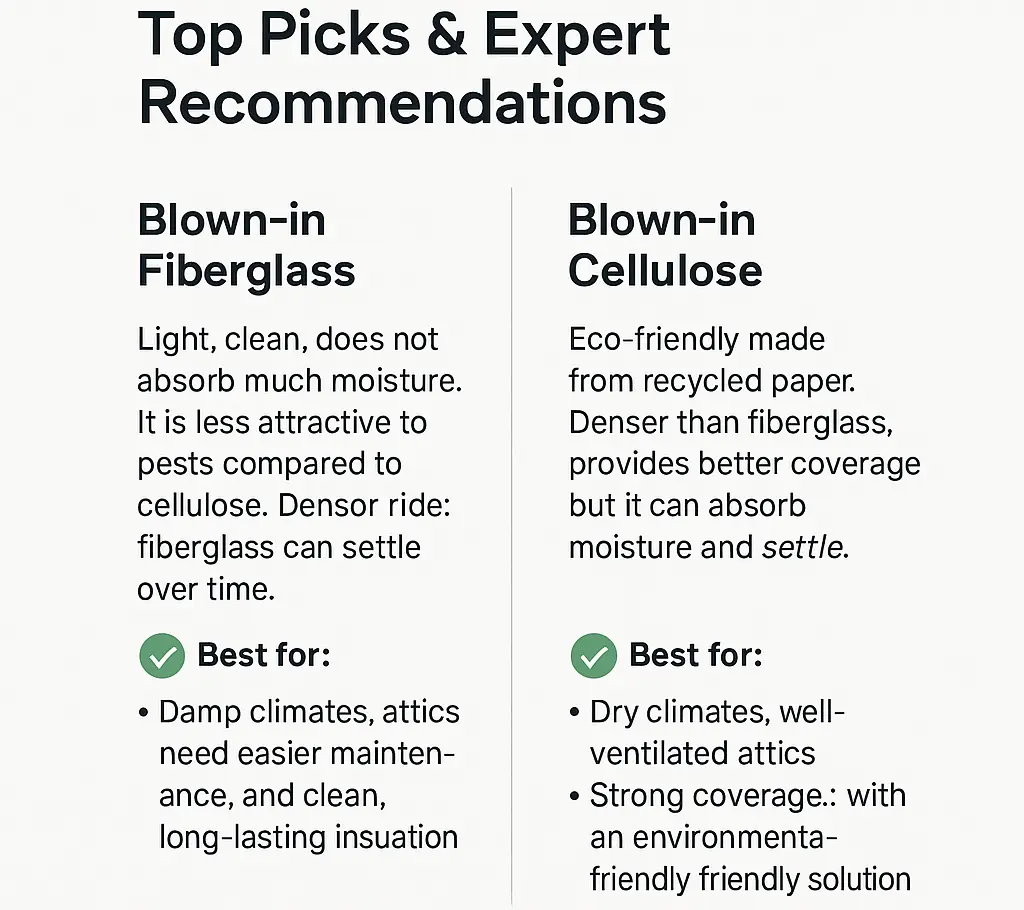
Blown-in insulation is a smart way to insulate your attic because it can cover large areas quickly and fill in small gaps that batts often miss. Homeowners usually choose between fiberglass and cellulose, and the right option depends on your attic’s needs, climate, and budget.
Fiberglass is light, clean, and does not absorb much moisture. This makes it a safer choice for homes in humid areas. It is also less attractive to pests compared to cellulose. The main drawback is that fiberglass can settle over time, which lowers its R-value. This means you may need to “top it up” after a few years to keep the same level of insulation. Best for – damp climates, attics that need easier maintenance, and homeowners who want clean and long-lasting insulation.
Cellulose is made from recycled paper, which makes it eco-friendly and great for people who want a greener home. It is denser than fiberglass, so it gives better coverage and can block more air leaks and sound. However, cellulose can absorb moisture and also settle, which reduces its performance if the attic has poor ventilation. Best for – dry climates, well-ventilated attics, and homeowners who want strong coverage and an environmentally friendly solution.
Expert Guidance – Which One Should You Choose?
- Pick fiberglass if your attic may face dampness, or if you want insulation that is easier to service later.
- Pick cellulose if your attic stays dry and you want maximum coverage with an eco-friendly material.
- In many homes, either option will save money on energy bills. The key is to match the material to your attic’s condition.
Pro Tip from Beni, Senior Technician at Pure Eco Inc:
“Before you decide on fiberglass or cellulose, always check your attic ventilation. Good airflow stops moisture problems and makes both materials last longer. I’ve seen many homes where the insulation itself was fine, but poor ventilation ruined the performance within a few years.”
Batt Insulation vs. Blown-In: Pros, Cons & When to Use Each
Batt and blown-in insulation are the two most common attic options, but they behave differently once installed. Choosing the right one depends on your attic’s shape, how you plan to use the space, and your long-term goals.
Batt Insulation. Batts come in pre-cut panels, usually fiberglass or mineral wool, that fit between attic joists. They work best in attics with open layouts and regular spacing. Because they are solid pieces, batts can be lifted and moved later if you need to run new wiring or make repairs. This makes them easier to service compared to blown-in insulation. Batts are also less likely to be disturbed by rodents.
- Pros: Affordable, DIY-friendly, easy to replace or adjust, rodent-resistant, long-lasting when kept dry.
- Cons: Leaves gaps in odd-shaped spaces, requires precise installation, lower R-value per inch compared to spray foam or rigid boards.
- Best Use: Attics with straight joists and open access, budget-friendly upgrades, and homeowners who want a DIY solution.
Blown-In Insulation. Blown-in insulation is made of loose fibers (fiberglass or cellulose) that are spread with special equipment. It settles into every corner, pipe gap, and uneven space, making it excellent for older homes or irregular attic layouts. However, it can lose loft and R-value over time, especially cellulose in humid climates. Once installed, it’s harder to move aside for future service work.
- Pros: Superior coverage, fewer air leaks, quick professional installation, great for retrofits.
- Cons: Can settle and lose effectiveness, cellulose may absorb moisture, not DIY-friendly, harder to access later.
- Best Use: Older homes with complex layouts, attics with many gaps or obstructions, and homeowners wanting maximum coverage.
Pro Tip from Beni, Senior Technician at Pure Eco Inc.:
“I often recommend batts to homeowners who value easy maintenance and service access. Blown-in is the better option when coverage is the priority, especially in older attics where air leaks are common.”
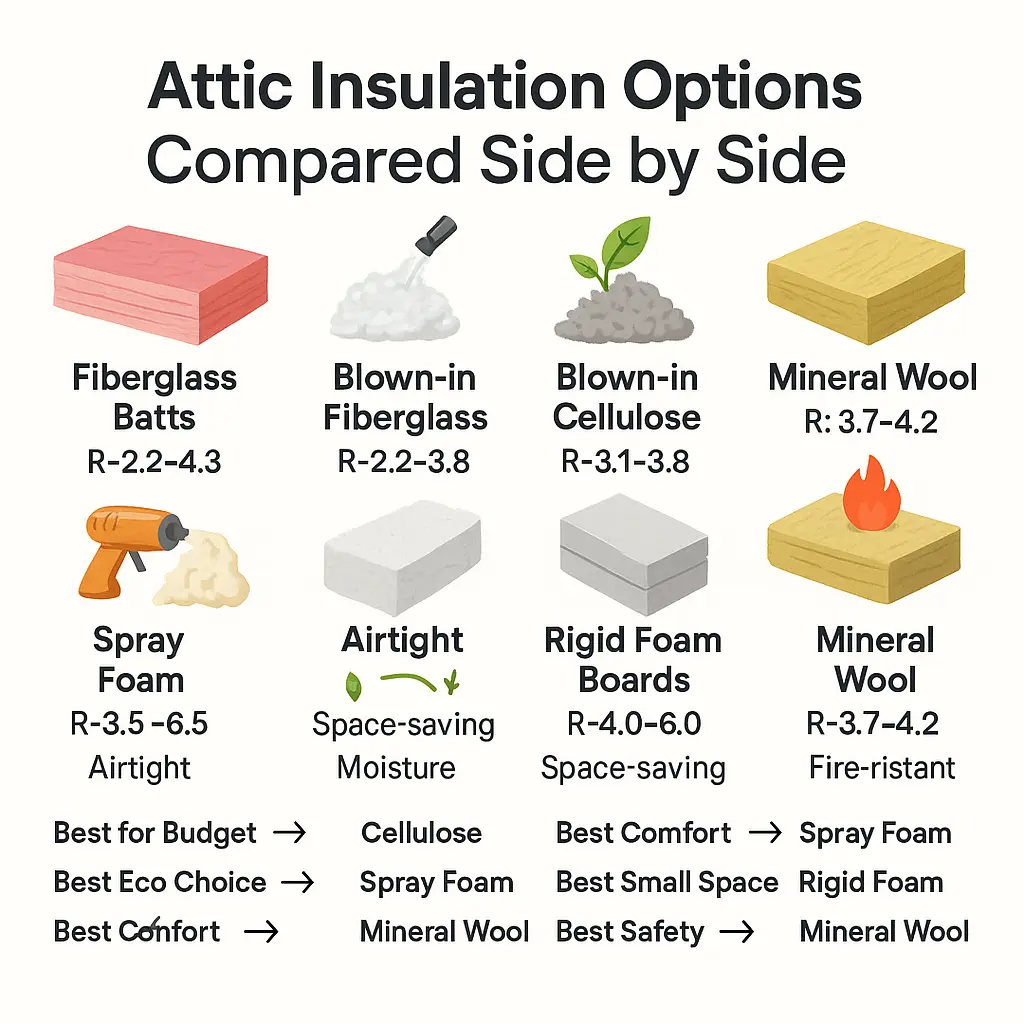
Best Attic Insulation Options Compared Side by Side
Choosing the right insulation can feel overwhelming, but breaking it down by performance, pros and cons, and best use cases makes the decision much easier. This quick comparison table shows how the most common attic insulation materials stack up – from budget-friendly fiberglass batts to high-performance spray foam. Use it as a cheat sheet to see which option matches your home’s climate, attic layout, and long-term comfort goals.
|
Insulation Type |
R-Value per inch |
Pros |
Cons |
Best Use Case |
|
Fiberglass Batt |
R-2.2–4.3 |
Cheap, DIY install, long-lasting |
Lower R-value, safety concerns |
Budget upgrades |
|
Blown-in Fiberglass |
R-2.2–4.3 |
Good coverage, retrofit-friendly |
Settles, reduced R-value |
Retrofit homes |
|
Blown-in Cellulose |
R-3.1–3.8 |
Eco-friendly, higher R-value |
Moisture issues, settling |
Green homes in dry climates |
|
Spray Foam (Closed) |
R-6–7 |
Superior air seal, moisture-resistant |
High cost, pro install |
Maximum efficiency |
|
Polyiso / Rigid Foam |
R-5.5–6.5 |
High R-value, thin profile |
More expensive |
Tight spaces |
|
Mineral Wool |
R-3.0–3.3 |
Fire-resistant, durable |
Pricier than fiberglass |
Safety-focused homes |
No matter which material you choose, the table makes it clear that each attic insulation type comes with trade-offs. Fiberglass batts are the go-to for quick, budget-friendly upgrades, while blown-in options are excellent for covering gaps in older attics. Spray foam delivers the highest R-value and an airtight seal, but requires a bigger upfront investment.
When deciding, think about:
- Your climate – hot, humid areas need moisture-resistant options; cold zones need higher R-values.
- Your attic’s layout – open joists suit batts, while irregular spaces often work better with blown-in insulation.
- Your budget vs. long-term savings – lower-cost materials may need topping up, while spray foam can last for decades with minimal maintenance.
Pro Tip from Pure Eco Inc.:
The best insulation isn’t always the most expensive — it’s the one that matches your attic’s condition and keeps energy bills low year after year.
What to Consider When Choosing Attic Insulation
Not every attic needs the same type of insulation. The right choice depends on your climate, attic condition, and long-term plans. Here are the main factors to keep in mind:
- R-Value Targets. R-value shows how well insulation resists heat flow. A higher R-value means better performance. Building codes set minimum R-values based on climate:
- Warm states like Texas often require R-38 to R-60.
- Cold states like Minnesota may need R-49 or higher.
Always check local building codes before starting, since they are designed to match regional weather.
- Moisture Control & Ventilation. Moisture is one of the biggest threats to attic insulation. Condensation can cause mold, mildew, and even roof damage. Spray foam creates an airtight seal, but it does not replace the need for roof vents. Proper soffit, ridge, or gable vents are essential to keep air moving and moisture out.
- Air Sealing & Rodent-Proofing. Even the best insulation loses power if air leaks are left open. Small cracks around pipes, ducts, or attic hatches can waste a lot of energy. Before adding insulation, seal these gaps and check for rodent entry points. Rodent-proofing is critical because pests can destroy fiberglass or cellulose by nesting inside it.
- Cost Per Square Foot. Budget is often a deciding factor. Typical installed costs:
- Fiberglass batts: $0.20–$1.00 per sq. ft. (DIY-friendly and affordable).
- Blown-in fiberglass or cellulose: $1.00–$1.50 per sq. ft. (better coverage, but may settle).
- Spray foam (open/closed cell): $3.00–$4.50+ per sq. ft. (highest R-value, moisture resistant, but requires professionals).
Expert Tip from Pure Eco Inc.:
“Don’t just look at the upfront cost. Good insulation should last 20–80 years, depending on the material, so long-term energy savings often outweigh the higher price of premium options.”
DIY vs. Professional Installation – Tips & Care
Not all attic insulation types are the same when it comes to installation. Some of them can be handled by a DIY enthusiast, while others require specialized equipment and professional expertise:
- DIY-friendly: Fiberglass batts are the go-to option for homeowners who want to handle the project themselves.
- Professional-only: Blown-in insulation and spray foam both require specialized machines for proper application. A professional crew ensures consistent coverage and correct thickness, which directly impacts performance.
- Safety gear: If you’re handling fiberglass batts, always use gloves, long sleeves, goggles, and a respirator to avoid irritation from glass fibers.
- Ventilation importance: Regardless of the material you choose, insulation doesn’t replace ventilation. Attic vents, be they soffit, ridge, or gable, must remain open to prevent condensation, mold, and roof damage. Spray foam improves air sealing but should always be paired with a proper ventilation plan.
- Maintenance: Plan to check your attic space every 3–5 years. If blown-in insulation appears uneven or “sunken,” it may need to be topped up. Look for moisture stains or signs of pests, which usually reduce performance.
Not sure how much insulation your home needs? Or whether your existing insulation is doing its job? Call Pure Eco Inc. today to request a free attic inspection. Our experts will measure your attic’s performance, check for pest or moisture problems, and recommend the most cost-effective insulation upgrade.
Choosing the Right Attic Insulation
There’s no single “best” attic insulation for every home. The right choice depends on your climate, budget, and comfort goals. Fiberglass batts remain the most budget-friendly and DIY-friendly option. Blown-in materials like fiberglass and cellulose are excellent for retrofits and hard-to-reach spaces, though they may settle over time. Spray foam delivers unmatched efficiency and durability, while rigid foam and mineral wool insulation shine in niche applications where space, fire resistance, or longevity are top priorities.
What matters most is choosing insulation that balances energy savings, durability, and indoor comfort for your situation. And since building codes and attic conditions vary, a professional inspection can take the guesswork out of the process.
If you’re not sure how to choose the right insulation for your attic, call Pure Eco Inc. today to schedule a free attic inspection or request more information about our attic insulation services. Our expert team will assess your home’s current performance, identify opportunities for improvement, and recommend the most cost-effective solution for lasting comfort and efficiency.
Key Takeaways
- Fiberglass batts are the most affordable and DIY-friendly, with added benefits of serviceability and rodent resistance.
- Blown-in insulation (fiberglass or cellulose) fills gaps well but may settle over time and require topping up.
- Spray foam delivers the highest performance (R-6–7 per inch), creates an airtight barrier, and lasts the longest, though it comes at a higher upfront cost and requires professional installation.
- Rigid foam boards (polyiso) are ideal for space-limited attics, while mineral wool adds fire resistance and durability.
- Ventilation remains essential: Insulation improves energy efficiency but does not replace attic venting.
- Costs vary widely: From about $0.20 per sq. ft. for batts to $4.50+ per sq. ft. for spray foam, but higher costs often bring longer-term savings.
- Maintenance matters: Inspect your attic every 3–5 years for settling, moisture, or pest activity.
Faq
Which attic insulation lasts the longest?
Closed-cell spray foam can last 80+ years without significant loss in performance. Fiberglass and cellulose may require topping up or replacement after 20–30 years.
What insulation is best for the attic in warm climates?
In hot southern states, fiberglass batts or blown-in fiberglass are popular because they resist moisture and keep attics cooler. Building codes often recommend R-38 to R-60.
What type of insulation for attic spaces works in colder climates?
In northern states, closed-cell spray foam or a thick layer of blown-in cellulose works well. These materials reach R-49 or higher, which helps keep heat from escaping in freezing winters.
What is the best blown insulation for attic retrofits?
Fiberglass is best if you want low-maintenance insulation that won’t absorb much moisture. Cellulose is better if eco-friendliness and maximum coverage are your priorities, provided your attic has good ventilation.
Can I put new insulation on top of old attic insulation?
Yes, as long as the old insulation is dry, mold-free, and not compressed. Adding new layers can boost R-value and improve energy savings.
What’s the most affordable insulation for an attic?
Fiberglass batts are usually the cheapest option, costing as little as $0.20 per sq. ft. They’re also DIY-friendly, which lowers installation costs.
Do I need professional installation for attic insulation?
Fiberglass batts can be DIY, but blown-in insulation and spray foam require special equipment and trained crews to ensure proper coverage and performance.
Sources
- https://www.energy.gov/energysaver/insulation
- https://www.energystar.gov/saveathome/seal_insulate/identify-problems-you-want-fix/diy-checks-inspections/insulation-r-values
- https://www.energystar.gov/saveathome/seal_insulate/attic-insulation-project
- https://insulationinstitute.org
- https://www.iccsafe.org/