
Key Takeaway
After reading this article, you will learn:
- What denim insulation is and how it is made from recycled jeans and cotton
- How denim insulation works for heat, sound, moisture, and fire safety
- What R-value means and how denim compares to fiberglass, cellulose, and other materials
- The main pros (safe, eco-friendly, soundproof) and cons (cost, moisture, installation)
- Where and how to use denim insulation in your home
- The cost, savings, and long-term return on investment (ROI)
What Is Denim Insulation?
Denim insulation is a modern type of home insulation made from recycled jeans and other cotton fabrics. Instead of ending up in landfills, old textiles are collected, cleaned, and turned into thick batts that can be placed in walls, attics, ceilings, or floors.
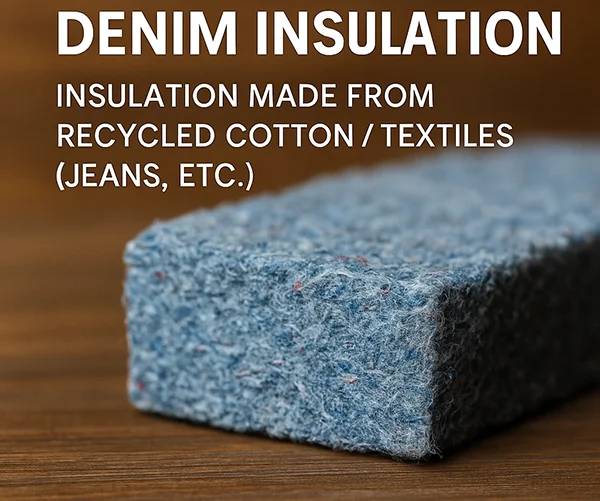
This insulation works in the same way as fiberglass or mineral wool, but it is safer to handle because it does not cause skin irritation or breathing problems. It is soft, non-toxic, and does not have the tiny glass fibers that make traditional insulation itchy.
Denim insulation is also treated with natural additives like boric acid, which helps protect it from fire, pests, and mold. Because of this, it is both eco-friendly and durable, making it a popular choice for homeowners who want comfort, safety, and sustainability in their house.
History of Denim Insulation and Its Industry Use
A company named Bonded Logic developed the material over 35 years ago and now owns patents to the manufacturing process. Good thing Bonded Logic developed such a system, and now we can all reap the benefits it comes with. It’s been reported that over 24 billion pounds of clothing, jeans included end up in the landfills each year. That is a crazy amount of clothes to just throw away.
Some well known manufacturer companies that participate in this amazing eco friendly insulation is Cotton and Levi Strauss & Co.. Pretty awesome that these big corporations are thinking of every possible way to participate in going about things in a more environment friendly way. You can also donate your denim to Blue Jeans Go Green , and participate in this amazing transition into the new world of insulation.
HGTV, featured denim insulation explaining the improved indoor air, high performance, and zero waste this type of insulation provides. They illustrated how denim insulation offers advantages over the traditional fiberglass batts and blown in such as; sustainability, eco friendliness, excellent thermal performance, better indoor acoustics, better indoor air quality, and improves health and safety. This is one talked about insulation to consider to have inside of your home.
Denim insulation is an amazing idea and we hope you are really considering it. One reason to think of, you are helping the environment. Like I mentioned early over 24 billion pounds of clothing is thrown away and I’m not even mentioning the other junk thrown in the landfills. The denim comes from scraps and clippings of denim that are found in manufacturing warehouses. Instead of tossing them, they give it to denim insulation manufacturing companies to make. Other of the denim material comes through donation as well. The manufacturer clean and sanitize them in a special rinse. The recycled denim is a sturdy natural cotton fiber weft under two or more warp threads and delivers a high performance of insulation.The most common denim manufacturing companies use is indigo denim. To manufacture this type of insulation requires less energy than it would for other insulation products.
Besides being extremely environmentally friendly, denim insulation delivers with high performance. It comes in average R-values of R-13, R-19, R-21 and R-30 in 3.4 – 3.7 per inch in batts and blown-in. It can be installed into residential and commercial buildings. Denim insulation performs the same if not better than fiberglass and cellulose. If you’re interested in receiving a LEED Certificate, this can be achieved with denim insulation.
How Denim Insulation Works
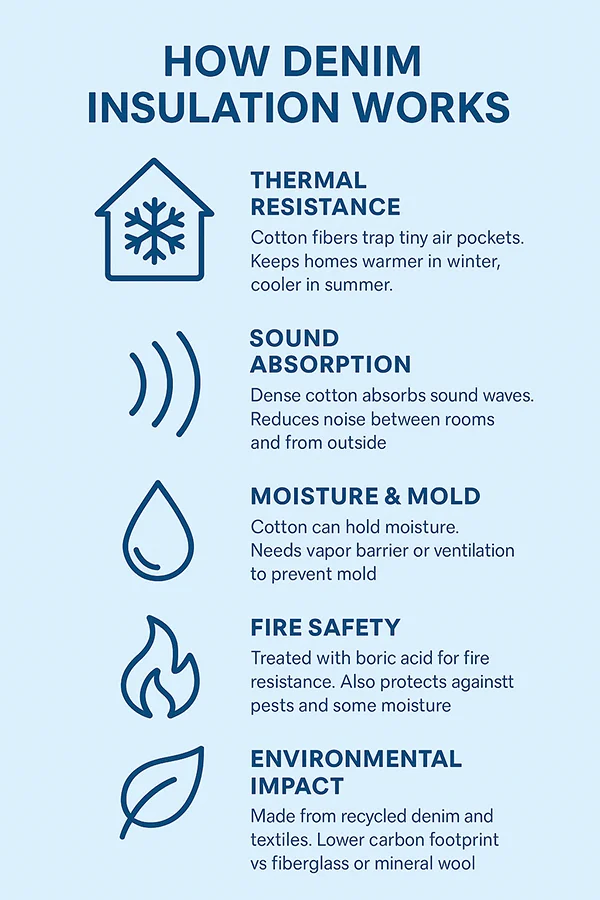
Denim insulation works by using recycled cotton fibers to slow down the movement of heat, sound, and moisture inside a home. Here is how it performs in different areas:
1. Thermal resistance
The fibers in denim insulation are thick and soft, with small air pockets between them. These air pockets trap heat and slow down its movement. The thicker and denser the insulation, the better it keeps a house warm in winter and cool in summer.
2. Sound absorption
Denim insulation is also very good for noise control. The cotton fibers absorb sound waves, which reduces echoes and blocks noise between rooms or from outside. This makes it a popular choice for bedrooms, offices, or home theaters.
3. Moisture and mold behavior
Cotton can absorb moisture, which means denim insulation needs good protection. If it gets wet and stays damp, it may lead to mold or mildew problems. For this reason, a vapor barrier or proper ventilation is important when installing it in places like basements or attics.
4. Fire resistance
Although cotton can burn, denim insulation is treated with natural fire retardants like boric acid. This treatment makes the material much safer and helps it resist fire, insects, and even some moisture problems.
5. Environmental impact
Denim insulation is made mostly from recycled textiles, which helps reduce waste and save resources. Compared to fiberglass or mineral wool, its production often has a lower carbon footprint. It is also free from harmful fibers or chemicals, making it safer for families and better for the planet.
Understanding R-Value for Denim Insulation
The R-value of insulation shows how well it resists heat flow. In simple terms, it tells you how good the material is at keeping warm air inside during winter and hot air outside during summer. A higher R-Value means better insulation performance. R-Values are measured per inch (or per centimeter) of thickness, so the thicker the insulation, the higher the overall R-Value.
Denim insulation has R-values that are similar to other common insulation materials. Typical batts come in ratings like R-13, R-19, and R-30, depending on thickness. On average, denim insulation gives about R-3.5 per inch, which is close to fiberglass and cellulose. For example:
- A 3.5-inch batt of denim insulation = R-13 (used in walls)
- A 6-inch batt = R-19 (used in floors or attics)
- A 9-inch batt = R-30 (used in attics for higher energy savings)
This means denim can perform just as well as fiberglass or cellulose when installed correctly.
The real performance of denim insulation can change based on a few factors. If the batts are compressed, the air pockets inside shrink, and the insulation loses some of its power. Denim is also a cotton-based product, so it can absorb moisture. If it gets wet, the R-Value drops, and there may be a risk of mold. This is why good ventilation and vapor barriers are important. Finally, installation quality matters a lot – gaps, air leaks, or poor fitting will reduce the insulation’s effectiveness, even if the material itself has a high R-Value.
Denim vs Fiberglass vs Cellulose: R-Value Comparison
| Insulation Type | R-Value Per Inch (average) | Common Batts / Ratings | Pros | Cons |
| Denim (cotton) | ~3.5 | R-13, R-19, R-30 | Eco-friendly (recycled), safe to touch, good soundproofing | Can absorb moisture, higher cost, harder to cut |
| Fiberglass | ~2.9 – 3.7 | R-11, R-19, R-30 | Affordable, widely available, and does not absorb water | Itchy to handle, can release tiny glass fibers |
| Cellulose | ~3.2 – 3.8 | Loose-fill or dense pack (R-values vary by depth) | Made from recycled paper, good at filling gaps, and low cost | Can settle over time, may need chemical treatment for fire/mold |
Pros & Advantages of Denim Insulation
Denim insulation has many strengths that make it attractive for modern homes. It is not only safe and eco-friendly but also performs well in thermal and sound control. Here are the main benefits homeowners value:
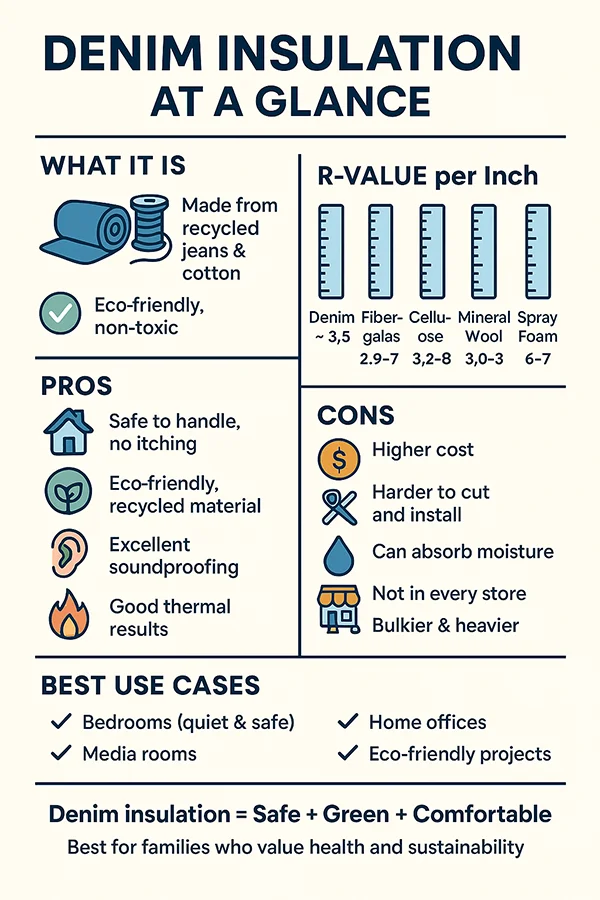
Safe for people. Denim insulation is gentle on the skin and lungs. It does not cause itching or release small glass fibers like fiberglass. Most products are also free from harmful chemicals, so the air inside the home stays healthier.
Better for the planet. This insulation is made from old jeans and cotton scraps that would otherwise become waste. Using recycled materials saves resources and lowers the energy used in production. Many builders also choose it to earn points toward green building programs such as LEED.
Quieter homes. Thick cotton fibers are very good at blocking sound. Rooms with denim insulation stay calmer because noise from traffic, neighbors, or other rooms is reduced. This makes it a strong option for family houses, apartments, or home offices.
Good thermal results. Denim performs at almost the same level as fiberglass or cellulose. It keeps heat from escaping in winter and stops hot air from entering in summer. With the right installation, it can help lower heating and cooling costs.Added protection. The material is treated with natural fire-retardant minerals, which slow down flames and also protect against insects. This makes denim insulation not only comfortable but also safe and long-lasting.
Additional Benefits:
- Better air quality.
- Less energy used resulting to lower energy bills.
- No chemicals or irritants, causing health issue such as asthma or skin rashes.
- Fire resistant, Class A building material.
- Mold and mildew resistant, with EPA fungal inhibitor.
- Soundproof, with soundproofing technology is traps, isolates, and controls sound waves.
- Environmental Friendly, doesn’t require much energy to be made, as well as decreases the amount of energy you use inside of your home to make the air comfortable.
- Health and Safety benefits for you and your family!
Now, with all good things there must be some negative effects to it also right? Having denim insulation is a little more pricey compared to the other insulation in the market, and requires a vapor barrier; which is an additional expense. However, the trade off is participating the care of our environment; and this is a personal decision. The amounts of dump in our landfill will decrease with your participation of having denim insulation installed into your home, and the extra cost wouldn’t matter to you.
Cons & Limitations of Denim Insulation
Even with many strong points, denim insulation is not perfect. It has some drawbacks that homeowners should think about before choosing it. These limits mostly affect cost, installation, and availability:
Higher cost. Denim insulation is usually more expensive than fiberglass. The material itself costs more, and shipping can add extra because the batts are heavier and bulkier.
Difficult to cut and fit. The batts are thick and dense, which makes them harder to cut cleanly. This can slow down installation, especially around small spaces like pipes or electrical boxes.
Moisture problems. Because denim is made of cotton, it can hold water if it gets damp. Wet insulation loses its power to resist heat and may develop mold. A vapor barrier or good ventilation is needed to keep it dry.
Limited availability. Unlike fiberglass, denim insulation is not always sold in local hardware stores. It may need to be ordered from special suppliers, which can delay projects.
Takes up more space. Denim batts are bulkier than some other types of insulation. They need more storage space before installation, and they may feel heavy to handle.
Pros and Cons of Denim Insulation
| Pros (Advantages) | Cons (Limitations) |
| Safe to handle – no itching, no harmful fibers | Costs more than fiberglass |
| Eco-friendly – made from recycled jeans and cotton | Harder to cut and install around small spaces |
| Very good soundproofing – reduces noise between rooms | Can absorb moisture if not protected |
| Solid thermal performance – similar to fiberglass and cellulose | Not always available in local stores |
| Treated for fire and pest resistance | Bulkier and heavier to transport or store |
When to Choose Denim Insulation and When It Is Not
Like any product, denim insulation is not perfect for every home. To decide if it is the right fit, it helps to look at the situations where it works best and where it may not be the best option.
When to choose denim insulation:
This material is a good match if you want something safe and non-toxic that will not cause skin irritation or breathing issues. It is also a smart choice if you care about the environment, since it is made from recycled denim and cotton. Many homeowners also prefer it for rooms where sound control is important, such as bedrooms, offices, or home theaters. If you want insulation with solid thermal performance, plus added protection against fire and pests, denim insulation can be a reliable option.
When not to choose denim insulation:
On the other hand, denim insulation may not be ideal if you are working with a tight budget. It costs more than fiberglass and can also be harder to cut and install in small or tricky spaces. Because denim fibers can hold moisture, it is not the best choice for damp areas unless you also install a vapor barrier. Availability can also be an issue, as it is not stocked in every local store. Finally, since denim insulation is bulkier and heavier, it may not be the easiest option to store or transport.
“Denim insulation is one of the safest and most eco-friendly materials on the market. But to get the best results, we always recommend pairing it with a proper vapor barrier and professional installation. This way, you enjoy maximum comfort, energy savings, and peace of mind.” – Insulation Expert, Pure Eco Inc.
Denim Insulation vs Other Types
When choosing insulation, it helps to see how denim compares with other common materials. Each type has its own cost, performance, and safety factors.
Denim vs Fiberglass
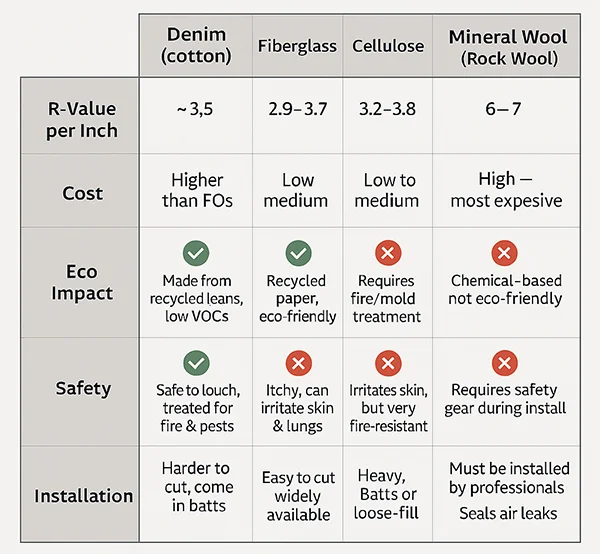
Fiberglass is the most common type of insulation and is usually cheaper than denim. It has an R-value of about 2.9–3.7 per inch, which is close to denim’s 3.5 per inch. Fiberglass is not eco-friendly because it is made from sand and chemicals, while denim is made from recycled jeans and cotton. Handling fiberglass can be irritating for skin and lungs, while denim is safe to touch. Fiberglass is easy to cut but may release small glass fibers, while denim is harder to cut but safer during installation.
Denim vs Cellulose
Cellulose is made from recycled paper and has an R-value of about 3.2–3.8 per inch, very similar to denim. Both are eco-friendly options. Cellulose is often blown into walls or attics, which makes it good at filling small gaps, while denim usually comes in batts that need to be cut and fitted. Cellulose is less costly than denim but may settle over time and need topping up. Denim keeps its shape but is more expensive.
Denim vs Mineral Wool (Rock Wool)
Mineral wool has an R-value of about 3.0–3.3 per inch, so its performance is close to denim. It is resistant to fire and water, which makes it safer in damp or high-temperature areas. However, it is heavier and can also irritate skin during handling. Denim does not cause irritation but does absorb moisture, so it needs a vapor barrier. In cost, mineral wool is usually cheaper than denim but more expensive than fiberglass. Both offer good soundproofing.
Denim vs Spray Foam
Spray foam has the highest performance, with an R-value of 6–7 per inch, much higher than denim. It also seals air leaks better, which improves energy efficiency. But spray foam is the most expensive option and must be installed by professionals. It is made from chemicals and is not eco-friendly. Denim is safer, healthier, and greener, but does not reach the same insulation level. For maximum efficiency, spray foam wins, while denim is chosen for safety and sustainability.
Comparison – Denim vs Other Insulation Types
| Type of Insulation | R-Value per Inch | Cost | Eco Impact | Safety | Installation |
| Denim (cotton) | ~3.5 | Higher than fiberglass & cellulose | ✅ Made from recycled jeans, low VOCs | ✅ Safe to touch, treated for fire & pests | Harder to cut, comes in batts |
| Fiberglass | 2.9 – 3.7 | Low, most affordable | ❌ Not eco-friendly, made from glass & chemicals | ❌ Itchy, can irritate skin & lungs | Easy to cut, widely available |
| Cellulose | 3.2 – 3.8 | Low to medium | ✅ Recycled paper, eco-friendly | Needs fire/mold treatment | Blown in, good for gaps but may settle |
| Mineral Wool (Rock Wool) | 3.0 – 3.3 | Medium | ❌ Made from stone fibers, not recycled | ❌ Irritates skin, but very fire-resistant | Heavy, batts or loose-fill |
| Spray Foam | 6 – 7 | High, most expensive | ❌ Chemical-based, not eco-friendly | ❌ Requires safety gear during install | Must be installed by professionals, seals air leaks |
This table helps homeowners quickly see that denim is safer and greener, while spray foam is more efficient but costly, and fiberglass remains the cheapest but less healthy.
Where & How to Use Denim Insulation
Denim insulation can be used in many parts of a house, but it works best in dry areas with good ventilation. Because it is safe to touch and has strong soundproofing, it is a popular choice for bedrooms, living rooms, home offices, and media rooms. It also fits well in walls, ceilings, attics, and floors, where it helps control both heat and noise.
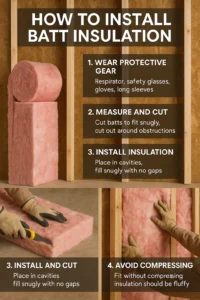
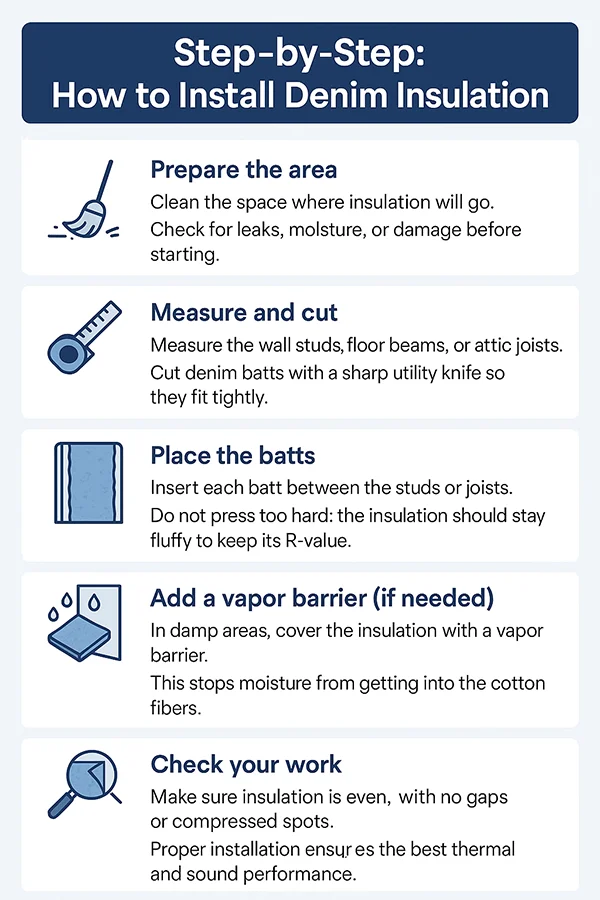
This material is usually sold in batts (thick, pre-cut sheets). To install it, the batts are placed between wall studs, attic joists, or floor beams. They must fit snugly without being squeezed too tightly, because compression can lower their R-value. For areas with pipes, wires, or other obstacles, the batts should be carefully cut to size.
Since denim insulation is made from cotton, it can absorb moisture. That’s why it is important to use it only in dry spaces or to combine it with a vapor barrier in areas where humidity is higher, like attics or basements. Proper ventilation also helps keep the insulation dry and effective.
Denim insulation is a smart choice for family spaces and eco-friendly projects, but it should always be installed with care to avoid gaps and moisture problems.
Installation & Practical Considerations
Denim insulation is safe and eco-friendly, but to get the best results it must be installed correctly. Because it comes in thick batts, cutting can be harder than with fiberglass. A sharp utility knife or special insulation saw will help make clean cuts, especially around outlets, pipes, and wiring.
It is important not to press the batts too tightly. Denim works by trapping air inside the fibers, and if it is squeezed, the R-value goes down. Always make sure the batts fit snugly without gaps, but still keep their fluffy shape.
Since denim is made from cotton, it can hold water if moisture gets inside. To avoid problems like mold or mildew, it is best to add a vapor barrier in damp areas such as basements or attics. Good ventilation also helps the insulation stay dry and last longer.
Fire safety is another key point. Most denim insulation products are treated with boric acid to resist fire and pests; however, always verify that the material meets local building codes before installation.
Finally, sealing air leaks around windows, doors, and wall openings will enhance the insulation’s performance even further. A careful installation means lower energy bills, better soundproofing, and a healthier home.
“Always install denim insulation in dry, well-ventilated areas. For attics or basements, we recommend adding a vapor barrier and sealing all air leaks. This helps the insulation stay effective for many years and protects your home from moisture problems.” – Beni, Senior Technician at Pure Eco Inc.
Denim Insulation – Cost, Savings & ROI
Denim insulation usually costs $1.10–$1.50 per sq. ft., while fiberglass is cheaper at $0.40–$0.70 per sq. ft. and cellulose is also on the lower end. The higher price comes from using recycled cotton and the heavier weight of denim batts, which can also raise shipping costs.
Even with the higher upfront price, denim insulation offers long-term savings. Its R-value is similar to fiberglass and cellulose, so it reduces heating and cooling bills by keeping your home energy efficient. It also keeps its shape over time, making it a durable and reliable option.
The return on investment (ROI) is best in regions with hot summers or cold winters, where energy use is higher. For eco-friendly building projects, denim insulation may also increase resale value because of its green credentials.
Denim insulation costs more at first, but with energy savings, durability, and sustainability, it can pay off in the long run.
Pure Eco, cares about you and the environment we live in! We always make sure that the material we install inside your home is the newest of quality and is safe for your family. We always have our team constantly doing research with the newest material and equipment in order to perform the best work for your home. We are all about customer satisfaction and want to be there for you and your family even when the job is done. We have a staff available to you mon – fri 8:30am – 5pm (pst) and Sunday, same times. Feel free to ask us anything about your research you found online and what you might think will work best for you. We will guide you through the whole process and leave you with a smile on your face! (877)-778-2551
Sources
https://www.reddit.com/r/Insulation/comments/1ithzfv/what_are_the_pros_and_cons_to_denim_insulation/
https://www.cottoninc.com/about-cotton/cotton-online/bluejeansgogreen-org/
FAQ
Why is denim insulation so popular right now?
Homeowners like denim insulation because it is made from recycled jeans, safe to touch, and does not release harmful fibers. It is also eco-friendly, helps with soundproofing, and has good thermal performance.
How does denim insulation compare to fiberglass?
Both materials have a similar R-value per inch, but fiberglass is cheaper. Denim is safer to handle, non-toxic, and more sustainable. Fiberglass is more widely available but can cause itching and irritation.
Does denim insulation attract moisture or mold?
Yes, denim can absorb water because it is cotton-based. To prevent mold, it should be used in dry spaces or combined with a vapor barrier in areas like attics or basements. Good ventilation is also important.
Is denim insulation fire safe?
Although cotton burns, denim insulation is treated with natural fire retardants, such as boric acid. This treatment helps protect it from fire, pests, and some moisture issues, making it safe for home use.
How much does denim insulation cost?
It usually costs around $1.10–$1.50 per sq. ft., which is more than fiberglass ($0.40–$0.70 per sq. ft.) or cellulose. The higher price comes from recycled materials and heavier shipping weight, but it pays off in durability and energy savings.
Can I install denim insulation myself?
Yes, it is DIY-friendly and safe to handle, but it is harder to cut than fiberglass. You should use a sharp utility knife and make sure the batts are fitted correctly without compression or gaps. In damp areas, always add a vapor barrier.
Where is denim insulation best used?
It works well in walls, ceilings, attics, and floors of dry, well-ventilated spaces. It is especially useful in bedrooms, home offices, and media rooms because of its strong soundproofing properties.
Is denim insulation worth the investment?
If you value safety, comfort, and sustainability, denim insulation is a smart long-term choice. It costs more at first, but it provides energy savings, lasts for many years, and adds eco-friendly value to your home.