Key Takeaway
- Learn how to soundproof a room against common problems like traffic, noisy neighbors, or footsteps from above.
- Understand how sound travels in a room through walls, windows, doors, ceilings, and floors, and why noise leaks happen.
- Discover the best materials, such as acoustic drywall, mass loaded vinyl (MLV), and mineral wool insulation
- Find out about DIY room soundproofing ideas that are cheap and easy, including curtains, rugs, and weatherstripping.
- See when a professional is the right choice to achieve long-term quiet and comfort.
- Get clear cost estimates for room soundproofing, from simple fixes to full professional solutions.
- Avoid mistakes in room soundproofing that waste money and leave your space noisy.
- Create a quiet and peaceful room where you can sleep, study, or work without distraction.
How to Soundproof a Room – A Comprehensive Guide to Effective Methods
This guide will help you tackle a variety of noise problems. We’ll show you the most effective ways to soundproof your room. Finally, you can enjoy a quiet, comfortable space. You’ll learn about different soundproofing methods, from simple DIY fixes to professional solutions. Whether you’re dealing with noise from the outside or within your home, we’ve got you covered with practical steps to make your room quieter and more peaceful.
Would you like a professional to handle your soundproofing needs? The experts at Pure Eco Inc. are ready to provide complete soundproofing services in Los Angeles and Southern California with a full warranty. If you have any questions or need a free consultation, feel free to call us at – (877) 607-9021!
Get Free Estimate!
Request Your Home Comfort Estimate
How Sound Travels and Types of Noise That Affect Soundproofing
Sound moves as waves through the air, walls, floors, and ceilings. Blocking sound is tough because it can slip through small gaps or thin materials. When sound hits a surface, part of it bounces back, while the rest continues through, making it challenging to stop completely.
5 main types of noise make soundproofing difficult:
-
Airborne noise – This is sound that travels through the air, like voices, traffic, TV, or music. It can come inside through windows, doors, or even thin walls.
-
Impact or structure-borne noise – This is caused when something hits a surface and the vibration travels through the building. Common examples are footsteps from upstairs, moving furniture, or objects dropping on the floor.
-
Flanking paths – Sometimes sound does not move directly through the wall but finds another way. For example, it can travel around the wall, through floorboards, ceilings, or even pipes and vents. These hidden paths often surprise people.
-
Reverberation and echo – Inside the room, hard surfaces like tiles, glass, or empty walls bounce sound back. This makes the room noisy and unclear, especially in kitchens, bathrooms, or offices.
-
Sound frequency – Noise also feels different depending on its frequency. High-frequency sounds, like a baby crying or birds, are sharp and easy to block. Low-frequency sounds, like heavy trucks, bass music, or machines, are harder to stop because they create strong vibrations.
Knowing about these noise types helps you pick the best soundproofing materials and methods.
Best Materials and Products for Soundproofing a Room
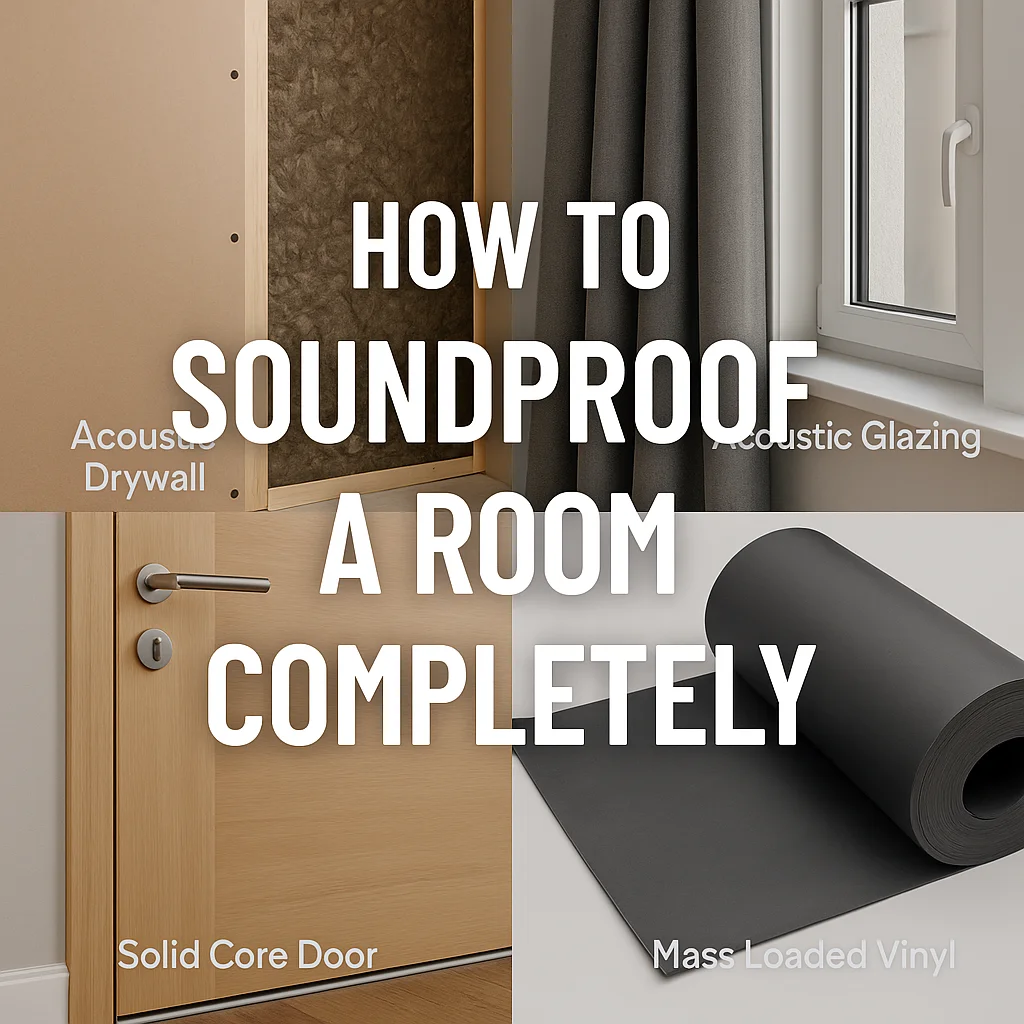
There are many materials that can be used for soundproofing, and each one works in a different way. Acoustic drywall is thicker and heavier than normal drywall, so it blocks more noise between rooms and is useful against voices or TV sounds. Mass Loaded Vinyl, often called MLV, is a strong but flexible sheet that adds extra weight to walls, floors, or ceilings. It is very effective for stopping airborne noise but can be more expensive. Mineral wool and fiberglass insulation are soft materials that fit inside walls or ceilings. They do not block sound completely, but they absorb it and make a room much quieter.
For impact noise, like footsteps, resilient channels and clips are often used. They separate the wall or ceiling layers so vibration cannot travel easily through the building. Smaller products like acoustic sealants, gaskets, and door sweeps also play an important role because even a tiny gap can let in a lot of sound. Windows are another big factor. Double or triple glazing, or special acoustic glass, can make a big difference when the problem is outside traffic or street noise. On floors, using underlays and carpets helps reduce vibrations and footsteps. Inside the room, heavy curtains, furniture, or acoustic panels can improve comfort by reducing echo.
|
Material Type |
Best For |
Pros |
Cons / Cost / Installation Difficulty |
|
Acoustic drywall / soundproof drywall |
Block airborne noise in walls & ceilings |
high STC rating |
heavy, expensive, installation needed |
|
Mass-loaded vinyl (MLV) |
Adds mass, flexible |
good barrier, retrofit |
expensive, can be messy, hidden spaces needed |
|
Mineral wool/glass wool/rock wool |
Filling cavities, absorbing sound |
good absorption, fire resistance |
can irritate, needs a frame or cavity |
|
Resilient channels, isolation clips / decoupling systems |
Floors, ceilings, and walls to reduce the vibration path |
very effective |
increases depth, cost, and requires skilled work |
|
Acoustic sealants, gaskets, sweeps |
Sealing leaks, perimeters |
cheap, easy |
small effect but essential |
|
Specialist windows/glazing (double, triple, acoustic) |
External noise through windows |
high benefit vs windows |
cost, may require replacement or custom installation |
|
Floor underlays, carpets, and floating floors |
Impact noise, floor-to-ceiling noise |
improves comfort |
raises floor height, cost |
|
Soft furnishings, curtains, rugs, bookshelves, textiles |
Reverberation/echo inside |
aesthetic + practical, lower cost |
limited if the external noise is high |
When you compare soundproofing materials, you may notice technical numbers like STC, NRC, and IIC. STC, which means Sound Transmission Class, shows how well a wall or window blocks airborne noise. A higher number gives better sound blocking. NRC, which is Noise Reduction Coefficient, shows how much sound a material absorbs inside a room. If the number is higher, you will have less echo and clearer sound. IIC, or Impact Insulation Class, measures how well a floor reduces impact noise such as walking or moving furniture. Again, the higher the number, the better the performance.
It is also important to think about safety and the environment when choosing materials. Some products are fire-resistant and safer to use in homes, while others can burn more easily. In damp spaces such as basements or bathrooms, it is better to choose materials that resist moisture and mold, otherwise the soundproofing will not last. From an environmental view, mineral wool is often made from recycled content, making it eco-friendly, while some foams or vinyl products can have a bigger environmental impact.
The best soundproofing usually comes from combining different products. For example, sealing gaps, adding insulation inside the walls, and upgrading the windows together will always bring better results than using only one solution.
Why is it important to identify the sources of noise and weak spots in your room for effective soundproofing?
To soundproof a room effectively, start by figuring out where the noise is coming from. Listen carefully and try to pinpoint whether the noise is coming through the walls, windows, floors, or ceiling. You might notice that certain areas are louder or that noise seems to travel from one spot to another.
Next, check the weak spots in your room that might let noise in or out. Common problem areas include gaps around windows and doors, thin walls, and spaces between floors and ceilings. By identifying these spots, you can focus on fixing them to reduce the amount of noise that enters or leaves your room.

Get Free Estimate!
Request Your Home Comfort Estimate
The Most Common Soundproofing Methods
Want to make your space quieter? Discover the top methods to reduce noise effectively. We’ll explore popular techniques like insulation, sealing gaps, and treating surfaces to help you create a more peaceful environment.
Insulation and Absorption
One of the most popular ways to soundproof room is by using insulation and sound absorption materials. Acoustic panels can be placed on walls to help absorb sound and reduce echoes. Insulation materials, like foam or fiberglass, can be added to walls and ceilings to block sound from passing through. Heavy curtains are another effective option; they help absorb sound and block noise coming through windows.
Sealing Gaps and Cracks
Sound can easily slip through small gaps and cracks around doors, windows, and other openings. To prevent this, use weatherstripping or sealant to fill in these spaces. Adding door sweeps to the bottom of doors and caulking around windows can make a big difference in reducing noise leakage.
Floor, Wall, and Ceiling Treatments
Different surfaces require different soundproofing approaches. For floors, consider using carpets or rugs with thick padding underneath to absorb impact noise. For walls, adding extra layers of drywall or specialized acoustic panels can help block sound. Ceiling treatments might include installing acoustic tiles or adding insulation above the ceiling to reduce noise from rooms above. Each of these treatments can help make your space quieter and more comfortable.
Additional Methods How to Soundproof a Room Cheaply
If you’re aiming to reduce noise from traffic and neighbors on a budget, there are several affordable strategies you can use. Start by hanging thick, heavy curtains to block outside noise. Add rugs or carpets to absorb sound and minimize noise from below. Use weatherstripping or foam tape to seal gaps around windows and doors, which will help prevent noise from entering your room.
To further enhance soundproofing, place large furniture like bookshelves against walls where noise is prominent. Replace hard furnishings with softer options such as plush sofas or fabric-covered chairs to absorb more sound. Installing door curtains can also block the noise coming through gaps. For additional improvements, consider acoustic baffles to absorb sound waves, noise barrier mats to reduce impact noise, and acoustic sealants to fill in any remaining gaps. These practical and inexpensive methods can help create a quieter and more comfortable living space.
The Challenges of Complete Soundproofing and How Noise Reduction Windows Help
Achieving complete soundproofing in a room is quite difficult. While it’s possible to make significant improvements, completely blocking all sound is challenging. Sound can find its way through even the smallest gaps or cracks. In addition, things like ventilation systems or electrical outlets can allow sound to seep in. So, while you can get very close, absolute silence might not be achievable in every situation.
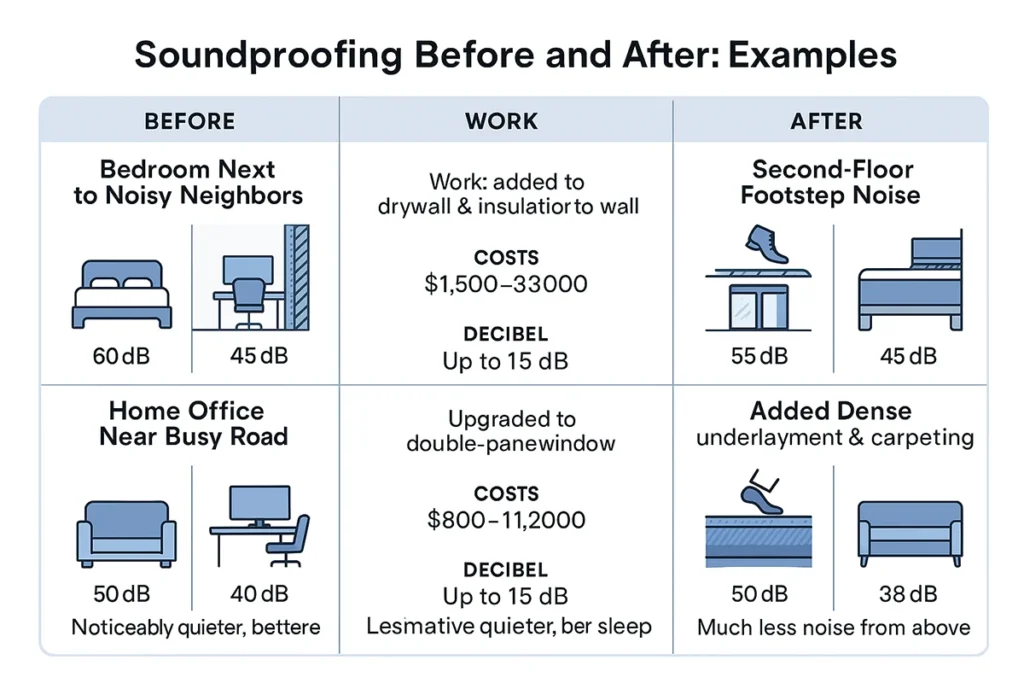
One effective way to reduce noise is by installing specialized windows, such as double-glazed or acoustic windows. These windows are designed with multiple layers and special seals that help block out more sound compared to standard windows. Double-glazed windows have two panes of glass with a layer of gas between them, which can significantly cut down on noise. They are built specifically for soundproofing and offer even better performance. While these windows can greatly reduce the amount of noise that enters or leaves a room, they cannot make a room completely soundproof. They are a key component in a broader strategy, helping to create a quieter and more comfortable environment.
Get Free Estimate!
Request Your Home Comfort Estimate
How to Soundproof a Wall – Challenges and Effective Solutions
Soundproofing existing walls can be a bit tricky but is definitely possible with the right approach. One of the main challenges is that you’re working with walls that are already in place, so you may need to work around existing features like electrical outlets and fixtures.
One effective method is to add a layer of soundproofing material to your walls. This can include installing acoustic panels or soundproofing drywall over your existing walls. These materials help to absorb and block sound from passing through.
Another option is to use insulation, which can be inserted between wall studs if you can access the wall cavity. Adding mass-loaded vinyl or acoustic foam to your walls can also help reduce noise.
While soundproofing existing walls might not make your space completely silent, these solutions can significantly reduce the amount of noise that enters or leaves your room, creating a more peaceful environment.
Choosing the Right Acoustical Materials for Effective Soundproofing
To achieve effectiveness, selecting the right materials for your specific needs is crucial. We help you choose the best acoustic products for your space.
Acoustical Surfaces Overview. Acoustical products are designed to absorb and block sound. Common options include acoustic panels, foam tiles, and soundproofing curtains. Acoustic panels are great for reducing echo, while foam tiles can help dampen sound. Soundproofing curtains add an extra layer of noise reduction to your windows.
Browse by Application. Different spaces have different soundproofing needs. For home offices, acoustic panels and rugs can help minimize distractions. In music rooms or studios, more specialized solutions like bass traps and soundproofing insulation are ideal. For bedrooms, heavy curtains and carpets can provide a quieter environment.
Browse by Product Type. Various materials serve specific purposes. Acoustic foam and panels are used for sound absorption to improve the sound in the room. Mass-loaded vinyl and soundproofing drywall are effective for blocking sound from entering or leaving a room. Seals and weatherstripping help reduce noise through gaps and cracks. By understanding these materials and their applications, you can choose the right solutions to meet your needs effectively.
Soundproofing a room can greatly enhance your comfort and tranquility by reducing unwanted noise. Remember, each space is unique, so consider your specific requirements and choose the solutions that work best for you.
Looking to turn your space into a peaceful retreat? The experts at Pure Eco Inc. help with professional soundproofing solutions tailored to your needs. Contact us today for a free consultation and discover how we can assist in making your environment more serene. Call us at (877) 607-9021 or visit our website to learn more about our services.
Get Free Estimate!
Request Your Home Comfort Estimate
Faq
Can You Make a Room Fully Soundproof?
It is almost impossible to make a normal home room 100% soundproof. Full silence is usually found only in recording studios or special test rooms with very thick walls and advanced systems. But for houses and apartments, you can reduce noise to a level where it no longer disturbs your sleep, work, or relaxation. By using the right materials, sealing gaps, and adding extra layers to walls, windows, and doors, you can block most outside sounds. The result may not be total silence, but it will feel like a much quieter and more peaceful space.
How to Soundproof a Room from Traffic Noise?
Traffic noise is one of the most common problems for people living near busy roads. To reduce it, the first step is to improve windows, because they are often the weakest point. Double-glazed or acoustic windows can cut outside noise by many decibels. If replacing windows is not possible, heavy curtains or window inserts can also help. Walls that face the street may need extra drywall or insulation to stop the low rumble of cars and trucks. Sealing all small gaps with acoustic caulk is also important, because even small holes let in more sound than you expect.
Where the Noise in Your Room Is Coming From?
Before starting any soundproofing project, it is important to know exactly how the noise gets inside. In many cases, it comes through windows, doors, or thin walls. But sound can also travel through ceilings, floors, air vents, or even electrical outlets. To find the source, listen carefully during the times when noise is strongest, like during rush hour or when neighbors are active. Walk around the room and notice where it feels loudest. Once you know the main entry points, you can focus on the right solution without wasting money on areas that are not a problem.
Cheap DIY Soundproofing Ideas for Any Room?
You do not always need expensive products to reduce noise. Simple and cheap methods can already make your room more comfortable. Adding thick rugs or carpets on the floor softens footsteps and reduces echo. Bookshelves filled with books add extra weight to walls and help block sound. Hanging heavy curtains or blankets on windows or thin walls also reduces outside noise. Weatherstripping around doors and windows is very affordable and closes small gaps where sound easily passes through. These DIY ideas will not make a room perfectly soundproof, but they are quick, low-cost ways to enjoy a quieter space.
How to Soundproof a Bedroom?
To create a peaceful and restful bedroom, there are some specific steps you can take to soundproof your space effectively. Start by focusing on your windows, use heavy curtains or window inserts to block out external noise. For walls, consider adding acoustic panels or hanging thick tapestries, which can help absorb sound.
To address noise from outside, ensure gaps around doors and windows are sealed with weatherstripping or foam tape. Adding a draft stopper at the bottom of the door can also help. For the floor, placing a thick rug or carpet with padding underneath can reduce noise from below.
Make your bedroom even quieter by arranging furniture strategically. Place bookshelves or large pieces of furniture against shared walls to help block noise. These tailored solutions will help create a calm and serene environment, perfect for restful sleep.
What Are the Best Techniques for Soundproofing Ceilings and Floors Adjacent to a Neighbor?
If you live in a multi-unit building and want to reduce noise between floors, there are several effective methods you can use. For floors, start by adding thick rugs or carpets with padding underneath. This helps absorb impact noise from footsteps or moving furniture.
For a more advanced solution, consider installing acoustic underlayments beneath your flooring. These materials are designed to dampen sound and reduce vibrations that can travel to the unit below.
When it comes to ceilings, using acoustic panels or tiles can help block sound from above. You might also consider adding a second layer of drywall with soundproofing glue between layers, which helps reduce noise transmission. Sealing any gaps or cracks around the edges of the ceiling and using acoustic sealants can further improve your efforts. These techniques can significantly reduce noise from neighboring units and create a quieter living space.
Can I soundproof existing walls, and how?
Yes, you can soundproof existing walls by adding layers of soundproofing material. Options include applying acoustic panels, soundproofing drywall, or mass-loaded vinyl to the walls. Sealing any gaps or cracks and adding insulation between wall studs can also help reduce noise.
What should I consider when choosing soundproofing materials?
When choosing special materials, consider the type of noise you are dealing with (e.g., airborne or impact noise), your budget, and the specific areas that need treatment. Materials like acoustic panels, foam tiles, and soundproofing drywall each serve different purposes and should be selected based on your room’s needs.
Are there professional services available for soundproofing?
Yes, many companies specialize in these services. Professionals can provide tailored solutions, including the installation of advanced materials and techniques. Contacting a soundproofing expert can help you achieve optimal results based on your specific needs.
Sources
- https://www.sciencedirect.com/topics/earth-and-planetary-sciences/airborne-noise
- https://www.quora.com/How-do-I-make-my-room-more-soundproof-I-live-in-a-small-apartment-with-thin-walls-and-my-family-can-hear-everything-I-say-and-do-even-when-my-door-is-closed-How-can-I-soundproof-my-room-without-an-elaborate-setup-or
- https://www.everest.co.uk/windows/noise-reduction-window/how-to-soundproof-room/