
Key Takeaway
By reading this guide, you will learn:
- What radiant barriers are and how they work in the attic.
- The most common radiant barrier problems such as dust, moisture, air leaks, and poor ventilation.
- How climate, material type, and installation quality affect performance.
- Why radiant barriers should be combined with other insulation methods.
- Solutions and precautions to avoid condensation, rodent damage, and structural issues.
- Practical steps to keep your attic safe, energy-efficient, and long-lasting.
What Are Radiant Barriers and Why Can Rodents Be a Problem?
Radiant barriers are special sheets, usually made from aluminum, that reflect heat away from your home. Homeowners install them in the attic to keep the house cooler in summer and warmer in winter. They can lower energy bills and make rooms more comfortable.
However, there are some radiant barrier problems homeowners should know about. Dust, moisture, and poor installation are common radiant barrier insulation problems. Another issue that many people overlook is rodents in the attic. Mice, rats, and even squirrels can make nests there. They chew wires, damage insulation, and can even tear parts of the radiant barrier. This not only creates safety risks but also reduces the barrier’s efficiency.
A well-insulated home is essential for maintaining comfortable indoor temperatures and minimizing energy consumption. One popular insulation option is the radiant barrier, which is designed to reduce heat transfer through radiation. While radiant barriers offer several benefits, it’s important to understand the potential problems associated with their installation and usage.
This article explores various radiant barrier problems, their causes, and possible solutions to ensure optimal performance and energy efficiency.
“We often see homeowners install radiant barriers for energy savings, but they are surprised when rodents move into the attic. Rodents can quickly destroy insulation and wiring, which makes the home less safe and less efficient. A full inspection and rodent-proofing plan is just as important as the radiant barrier itself.“ – Beni, Senior Technician at Pure Eco Inc.
Understanding Radiant Barriers
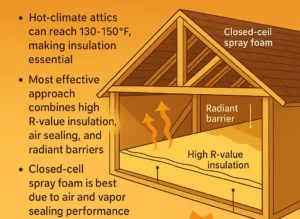
Radiant barriers are materials typically installed in attics, primarily underneath the roof. They work by reflecting radiant heat away from the living space, reducing the amount of heat transferred through the roof into the attic. This, in turn, helps maintain lower temperatures inside the house and reduces the load on the air conditioning system, leading to potential energy savings.
Another point to keep in mind is that radiant barriers do not stop heat that moves through air leaks or gaps in insulation. If the attic already has poor ventilation or missing insulation, the barrier alone will not fix the problem. In fact, this can create new issues such as trapped heat, moisture buildup, or hidden spaces where dust and even rodents can collect. These situations are some of the most common radiant barrier insulation problems that reduce efficiency over time.
Common Problems Associated with Radiant Barriers
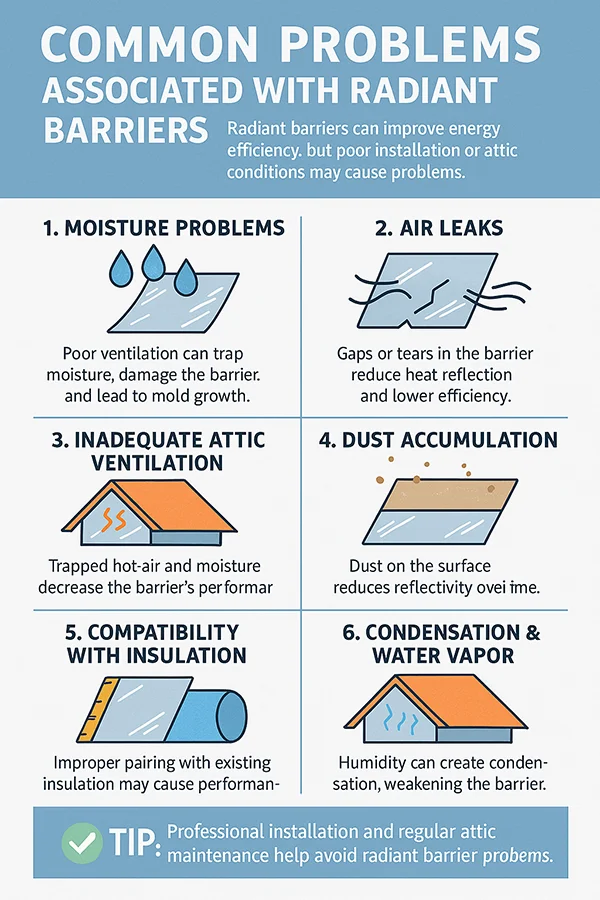
While radiant barriers can be an essential part of attic insulation, they come with potential problems you may want to consider, especially if they are not properly installed.
Moisture problems
Improper installation or inadequate ventilation can lead to moisture accumulation in the attic. Moisture can cause damage to the barrier material, reduce its reflective properties, and promote the growth of mold and mildew.
Air leaks
If the radiant barrier is not installed correctly, it may develop gaps or tears, allowing air to pass through. Air leaks can compromise the barrier’s effectiveness and undermine its ability to reduce heat transfer.
Inadequate attic ventilation
Insufficient ventilation in the attic can trap hot air and moisture, which can impact the performance of the radiant barrier. Proper attic ventilation is crucial to maintaining a balanced and healthy attic environment.
Dust accumulation
Over time, dust and debris can accumulate on the surface of the radiant barrier. This can reduce its reflective properties and diminish its overall effectiveness in blocking radiant heat.
Compatibility with existing insulation
Radiant barriers are most effective when combined with other insulation materials. However, compatibility issues between the radiant barrier and existing insulation can arise, leading to potential performance problems.
Condensation and water vapor
In humid climates or areas with inadequate moisture control, condensation and water vapor can form in the attic. If not properly addressed, these moisture issues can damage the radiant barrier and compromise its performance.
Structural issues
In some cases, radiant barriers may be installed on the underside of the roof decking or in areas with structural elements such as posts or cracks. These installations may pose challenges and require careful consideration to ensure proper application.
Solutions and precautions
Thankfully, none of these problems need worry you if you have entrusted the radiant barrier installation to a professional.
Hiring a qualified contractor experienced in radiant barrier installation is crucial. They will ensure the barrier is correctly installed, without gaps or tears, and in accordance with building codes and best practices and that any potential problems are addressed before they can even manifest.
If you wish to tackle the installation yourself, here is what you need to keep in mind.
Adequate attic ventilation
Prioritize proper attic ventilation to prevent moisture buildup and maintain optimal performance of the radiant barrier. This includes ensuring the presence of soffit vents, ridge vents, or other appropriate ventilation systems.
Moisture control
Implement measures to control moisture in the attic, such as addressing any existing leaks, using vapor retarders on the ceiling, and ensuring proper sealing of the attic floor directly below the living space.
Regular maintenance
Periodically inspect the radiant barrier for any signs of damage, dust accumulation, or moisture-related issues. Clean the surface if necessary and address any identified problems promptly.
Compatibility considerations
When combining a radiant barrier with existing insulation, consult with a professional to ensure compatibility and proper installation techniques for optimal performance.
Consider spray foam insulation
In certain cases, spray foam insulation can be a suitable alternative or complementary solution to radiant barriers. Consult with insulation professionals to explore the best options for your specific needs.
Address structural challenges
If installing a radiant barrier in an area with structural elements or cracks, consult with a contractor to determine the best way.
| Solution / Precaution | What to Do | Why It Helps |
| Adequate Attic Ventilation | Install soffit vents, ridge vents, or fans to improve airflow. | Prevents heat and moisture buildup that can damage radiant barriers. |
| Moisture Control | Use vapor barriers, seal roof leaks, and ensure proper drainage. | Reduces risk of mold, mildew, and barrier damage. |
| Regular Maintenance | Inspect radiant barriers for dust, tears, and rodent activity. | Keeps the reflective surface effective and prevents hidden problems. |
| Compatibility Considerations | Combine radiant barriers with proper insulation types. Avoid blocking airflow. | Ensures maximum performance and energy savings. |
| Consider Spray Foam Insulation | Evaluate spray foam as an alternative or supplement to radiant barriers. | Provides air sealing, insulation, and moisture control in one step. |
| Address Structural Challenges | Install barriers carefully around beams, posts, and roof features. | Prevents gaps, air leaks, and weak spots in coverage. |
Radiant barriers improve energy efficiency, but their performance can drop if problems like dust, moisture, or rodents are ignored. Proper installation and regular care are key to keeping them effective.
Addressing Common Problems Associated with Radiant Barriers
Radiant barriers can be effective in reducing heat transfer through radiation and improving energy efficiency in homes. However, it is important to be aware of the potential problems that can arise with their installation and usage. Moisture problems, air leaks, inadequate attic ventilation, dust accumulation, compatibility issues with existing insulation, and condensation are some of the common challenges associated with radiant barriers.
To overcome these problems and ensure optimal performance, proper installation by qualified contractors is essential. Adequate attic ventilation should be prioritized to maintain a balanced attic environment. Regular maintenance and inspections are necessary to address any issues promptly, such as dust accumulation or moisture-related problems. Consulting professionals can help determine the best solutions, including spray foam insulation or alternative methods if structural challenges exist.
By being aware of these potential problems and taking appropriate precautions, homeowners can maximize the benefits of radiant barriers while minimizing any issues that may arise. It is crucial to prioritize energy efficiency, comfort, and the long-term performance of the radiant barrier system to create a more sustainable and comfortable living environment.
Remember, if you encounter any concerns or are unsure about radiant barrier installation or maintenance, it is always recommended to consult with professionals who specialize in insulation and energy efficiency. With proper attention and care, radiant barriers can continue to be an effective solution for improving energy efficiency and comfort in homes.
Call Pure Eco Inc. today at (877) 870-7998 and ask for your free radiant barrier installation quote. Don’t forget your free Home Comfort Estimate!
FAQ
What are the most common radiant barrier problems?
The main problems are dust buildup, trapped moisture, poor ventilation, air leaks, and gaps from bad installation. These can reduce how well the barrier reflects heat.
Should I choose a solid or perforated radiant barrier?
A solid barrier blocks both heat and water vapor, but it can trap moisture if the attic has poor ventilation. A perforated barrier has tiny holes that let water vapor escape, lowering the risk of condensation.
Do radiant barriers work in every climate?
They work best in hot, sunny climates where reflecting heat brings big energy savings. In cold or mixed climates, condensation is more likely, so proper ventilation and sealing air leaks are very important.
What types of radiant barriers are available?
The most common types are:
- Foil sheets (flexible and easy to install).
- Foil-backed OSB (roof decking with foil on one side).
- Foam-backed foil (adds insulation value).
Each type has unique benefits and challenges.
Do radiant barriers cause roof shingles to get hotter?
Yes, but only by about 2–5°F, which usually does not shorten the life of the roof.
Where does attic moisture come from?
Most attic moisture comes from inside the house. Warm air from bathrooms, kitchens, ducts, or ceiling lights can rise into the attic and cause condensation when it touches a cold surface.
Why is an air gap important for radiant barriers?
The shiny surface of a radiant barrier only works if there is an air space next to it. Without this gap, heat moves through by conduction, and the barrier loses its effectiveness.
What do building codes say about attic ventilation?
Many codes require 1 square foot of vent area for every 150 square feet of attic floor space. If a vapor retarder is used, some allow 1:300. Following these rules helps keep radiant barriers working properly.
Can radiant barriers replace insulation?
No. Radiant barriers reflect heat but do not stop conduction or convection. They should always be combined with attic insulation for the best results.
Can rodents damage radiant barriers?
Yes. Mice, rats, and squirrels can nest in the attic and chew wires, insulation, and even tear parts of the barrier. Rodent-proofing is important when adding attic insulation or radiant barriers.